

Although antifungal resistance affects fewer people than antibacterial resistance, its effects are generally more catastrophic. An estimated 6.5 million people worldwide are infected and 2.5 million die every year because of an invasive fungal disease.
Use of antifungals in agriculture decreases their effectiveness in humans. Stakeholders must decide how to balance protecting our essential crops with the ability to treat resistant fungal pathogens in humans.
What are the most common misconceptions about fungal infections?
Associate Professor Justin Beardsley is an infectious diseases specialist at the University of Sydney. His focus is fungal infections. Dr Beardsley says that when we think about fungal infections, we tend to think that these are limited to thrush, ringworm and tinea of the nails, which are the most common community-level experiences of fungal infections.
However, when we look at the challenges around antifungal resistance, what we mean are the invasive fungal infections. These are infections of our internal organs that lead to progressively worsening disease and can be deadly.
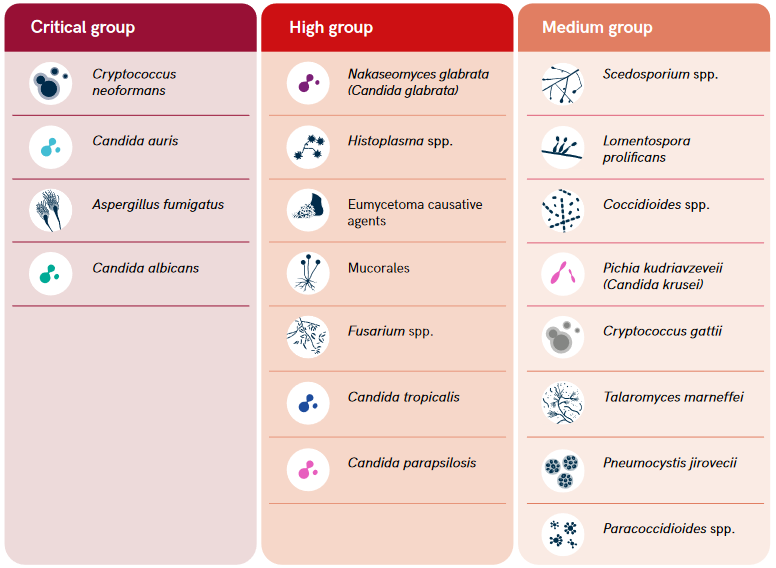
The top four fungal pathogens taken together cause more deaths than malaria, and almost as many as tuberculosis. People with underlying health problems or weakened immune systems are most at risk of invasive fungal infections.
“
The biggest challenge of antifungal resistance is that it is very much a ‘One Health’ issue.
Associate Professor Justin Beardsley
How does antifungal resistance differ from antibacterial resistance?
The evolutionary principles of resistance are the same across bacteria, fungi, viruses and parasites. All will develop resistance to antimicrobial agents, given enough time and if the level they are exposed to is low enough to be survivable.
Bacteria can mutate and pass on their genetic changes very quickly. Fungi are more complex than bacteria. “Because of the complexity of their structures, evolution happens more slowly in fungi,” says Dr Beardsley.
Indeed, the slow process of antifungal resistance means that we did not initially recognise it. We just assumed that fungi did not adapt to antifungal treatments and thus we did not used to monitor for antifungal resistance in the same way that we do for antibacterial resistance.
However, we now know that antifungal resistance does develop, sometimes over a period of years. For example, the fungal pathogen Aspergillus fumigatus was able to evolve resistance to overcome the effect of azoles used in agriculture. This means that azole drugs are now no longer as effective to treat human infections. “We see rates of resistance of around 20% in Europe, and up as high as 90% in Vietnam where I do my research,” says Dr Beardsley.
What consequences are we likely to see as antifungal resistance increases?
Although antifungal resistance affects fewer people than antibacterial resistance, its effects are generally more catastrophic. It is estimated that every year 6.5 million people worldwide are infected and 2.5 million die because of an invasive fungal infection.
Fungal infections tend to affect groups of people with particular risk factors. Commonly they have a weakened immune system, such as people with haematological malignancies, those receiving chemotherapy, staying in intensive care units or with HIV infection. Older people and those undergoing complicated surgery are also at increased risk.
Patients infected with a systemic fungus that is resistant to antifungals have very poor treatment outcomes. As antifungal resistance increases, this will have serious impacts for individuals and communities.
What are particular risks and challenges of antifungal resistance?
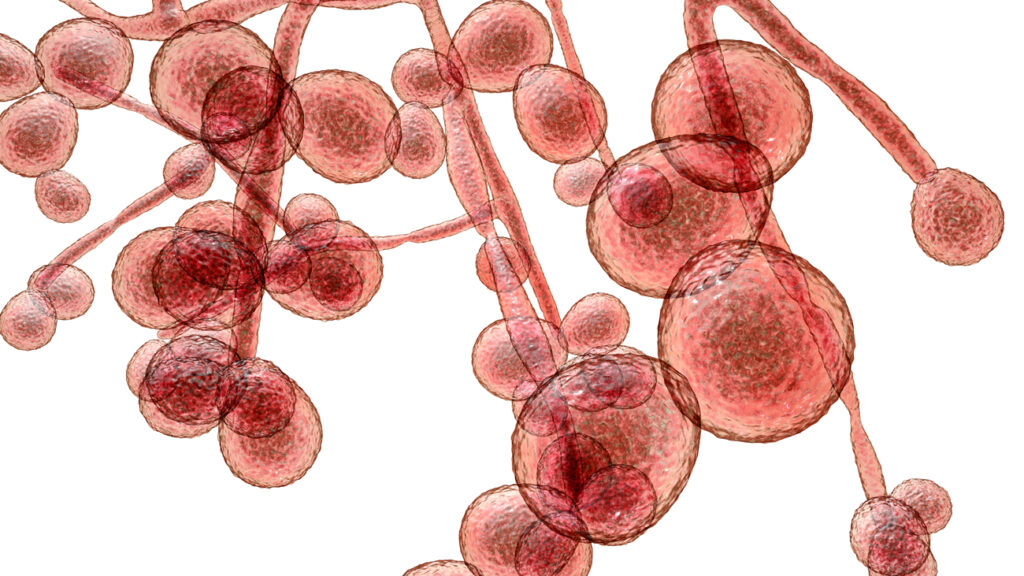
Compared with bacteria, fungi more closely resemble human cells. This close similarity makes it challenging to develop drugs that are effective against fungi without being toxic to humans. Indeed, there are antifungal drugs that were originally developed as chemotherapy agents to kill human cancer cells, were not sufficiently effective and then coincidentally were found to be good at killing fungal cells.
However, “the biggest challenge of antifungal resistance is that it is very much a ‘One Health’ issue,” says Dr Beardsley. Most of the time, fungal infections are not passed from person to person but are instead passed to people from the environment. This makes looking after our environment especially critical.
Olorofim is a new antifungal treatment to be used when other treatments are no longer effective. “It is very promising and good at treating otherwise drug-resistant infections,” says Dr Beardsley. Unfortunately, at the same time as olorofim was being developed for human use, a structurally similar drug called ipflufenoquin was being developed for use in agriculture. Researchers showed that Aspergillus fungi exposed to ipflufenoquin rapidly evolved resistance to olorofim.
Ipflufenoquin is already being used in the environment at the same time as olorofim is being developed as a lifesaving backup drug for invasive fungal infections in humans. “Last year, we at ANZMIG, which is the Australian New Zealand Mycology Interest Group, we found out that ipflufenoquin has been approved for use on soft berry fruits in Australia,” says Dr Beardsley.
We need to talk about how we balance protecting our essential crops against fungal diseases with the ability to treat resistant fungal pathogens in humans. Policymakers and other stakeholders in agricultural and human health must have these discussions and collaborate on solutions.
“
We’ve neglected the importance of fungal infections in humans, but now we’re catching up.
Associate Professor Justin Beardsley
What else can we do to address antifungal resistance?
Fungal pathogens have traditionally been quite far down the list of research priorities. Up until recently, they were allocated less than 2% of the research funding available for infectious diseases caused by different pathogens.
Much of the research effort over the last decade has been on developing agents that are structurally similar to existing antifungal drugs. However, what is needed is a focus on developing and bringing to market novel molecules to minimise our reliance on the small number of drug classes currently available for systemic therapy.
Dr Beardsley helped develop the World Health Organization (WHO) fungal priority pathogen list which focuses on systemic fungal infections with drug resistance and other challenges. The researchers are calling for mapping and surveillance of drug resistance, more basic research into invasive fungal species, and financial support for development of new antifungal treatments.
Dr Beardsley is also a member of the WHO expert advisory group on implementing the fungal priority pathogens list. The blueprint includes actionable items that policymakers can implement in their own respective countries.
“We’ve neglected the importance of fungal infections in humans, but now we’re catching up, which is great,” says Dr Beardsley. “People are recognising that antimicrobial resistance happens in fungi and that we need to develop new antifungals to be ahead and ready as resistance emerges.”
References
- Denning DW. Global incidence and mortality of severe fungal disease. Lancet Infect Dis. 2024;24:e428–e438.
- Beardsley J. Pathogens of importance in lung disease – implications of the WHO fungal priority pathogen list. Respirology. 2024;29:21–23.
Anja Becher is a Sydney-based freelance medical writer. She has more than 20 years’ experience writing across a wide range of health topics, including cardiovascular and respiratory medicine, metabolic diseases, gastroenterology and oncology.
You may also be interested in:
What lies beneath: AMR in Australia’s water