- Session 5: Capital ideas: Impact investing is sustainable and scalable
- Session 6: The FAIRR initiative on AMR: what’s next for investor action
- Session 7: Blended finance: moving capital in a constrained world
Session 5: Capital ideas: Impact investing is sustainable and scalable
Impact investing is expanding what’s possible in AMR, bringing capital, intention, and innovation together to drive real-world change. This session explored how impact investing and innovative financing can help realign capital flows with long-term health, environmental and societal outcomes, and how public, private and philanthropic actors can work together to close persistent investment gaps.
Summary
Many AMR solutions struggle to scale despite clear need and technical readiness. A central argument was that capital is abundant globally, but returns rarely reflect the full social, environmental, and economic costs of antimicrobial resistance. AMR was framed as a systems problem in which benefits accrue broadly to society, while revenues often remain narrow, delayed, or misaligned creating a structural investment gap.
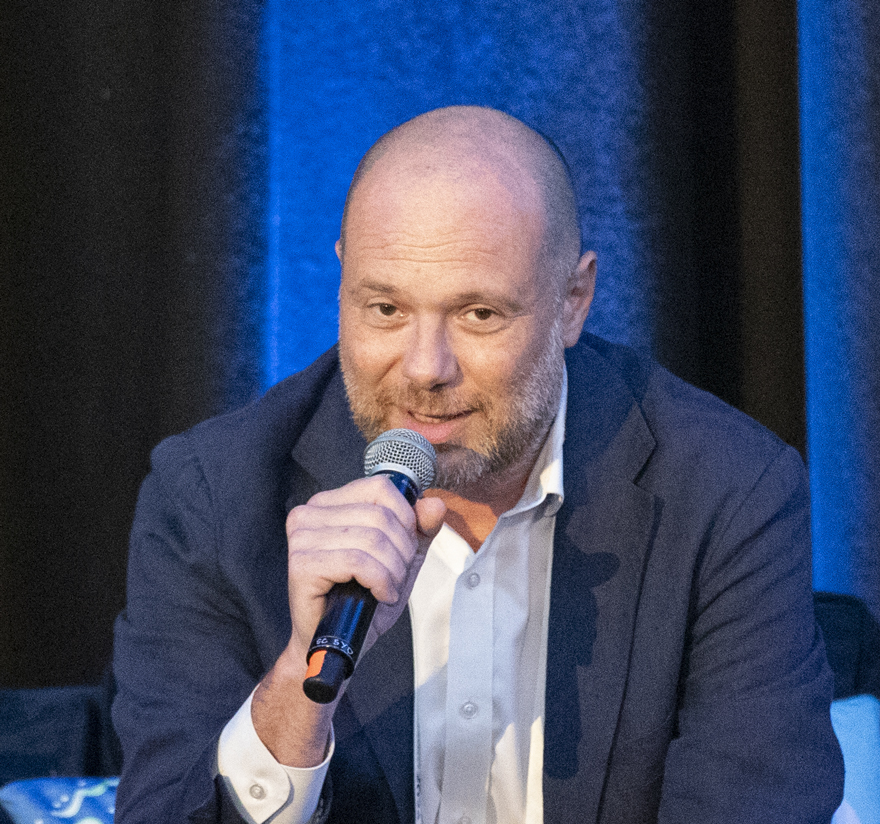
“There is no shortage of capital. The challenge is that many of the benefits we care about sit outside the earnings of the investment and unless that gap is funded, capital won’t flow.”
Richard Brandweiner, Chair and Foundation Member, Impact Investing Australia
Financing impact
The discussion outlined four practical ways the gap between private returns and public benefit can be funded. First, through regulatory or policy mechanisms that price externalities or create economic incentives, effectively embedding public benefit into investable returns. Second, through philanthropic or government funding, including schemes such as carbon credits or social infrastructure programs, which transfer the value of externalities to the investment vehicle. Third, through the creation of a ‘greenium’, where products or services command a premium because consumers value the positive outcomes they generate. Finally, through innovation-driven advantage, where unique technology or delivery models create a competitive moat, such as patent protection, proprietary data or regulatory exclusivity, that enables outsized returns despite broader system constraints.
Impact investing was introduced as a practical framework for addressing this mismatch by explicitly considering risk, return and impact together. Rather than treating impact as an add on, speakers emphasised that all capital investment generates impacts, be they positive or negative, intended or unintended, and that making these impacts visible enables better investment decisions. This approach extends beyond exclusionary screening to actively supporting solutions that prevent harm and address underinvestment in prevention, supply chains, and One Health interventions.
Panellists emphasised that different forms of capital play complementary roles. Philanthropy, government, and private investors operate with distinct objectives, time horizons, and risk tolerances. When philanthropic or public capital is combined with private capital, each deployed for what it does best, it becomes possible to fund externalities, absorb early risk, and improve investment viability. This alignment can unlock significantly larger flows of private capital into businesses and initiatives that deliver broader social good, including AMR solutions whose public benefits far exceed their near-term revenues.
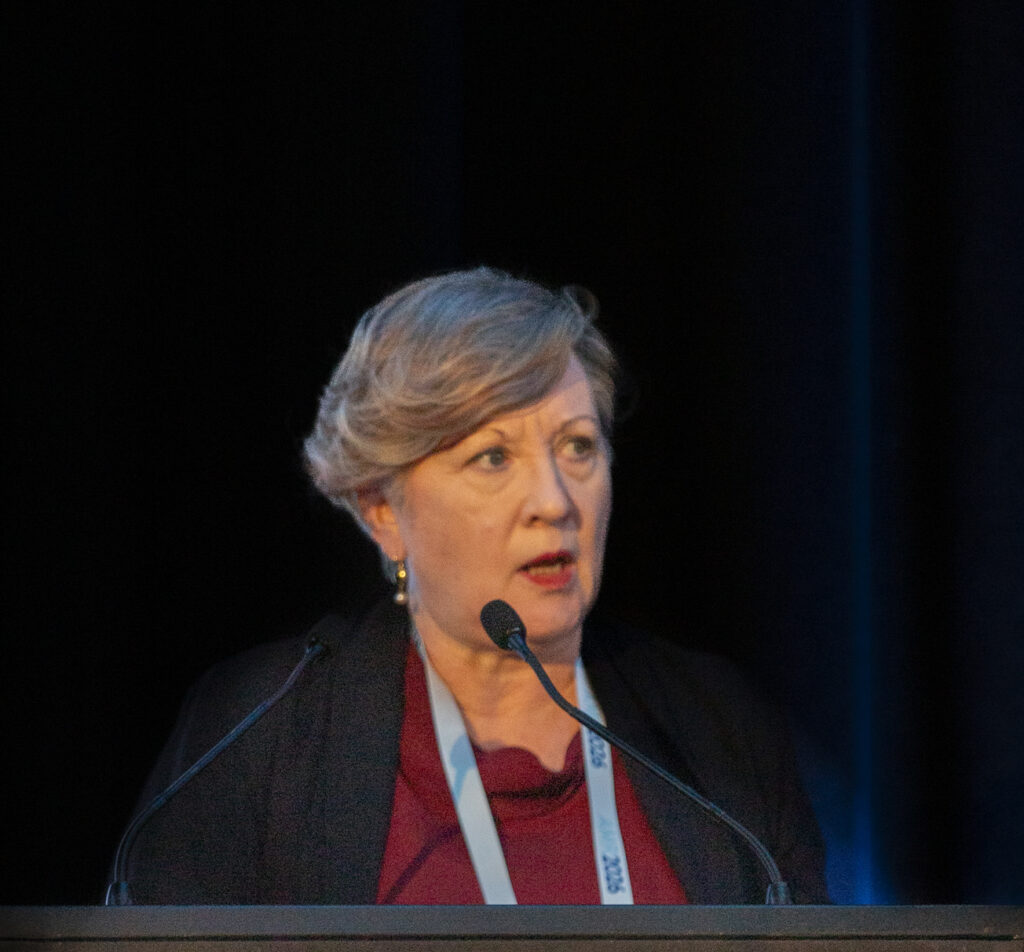
“We can have the best solutions, but if we’re not moving funding and financing differently, none of them will scale.”
Rosemary Addis AM, Founding Managing Partner, Mondiale Impact
Examples from health, infrastructure, and social outcomes, including vaccine delivery, eye health, road safety, and mission‑aligned healthcare endowments, illustrated how blended finance, outcome-linked instruments and mission-aligned endowments can mobilise significantly larger pools of capital. A recurring theme was that financing challenges are also design challenges: data, incentives, behaviour, and governance shape where capital flows and whether it delivers durable impact. Applying thematic lenses to investment such as gender, climate or potentially AMR was presented as a way to systematically identify risks, opportunities and leverage points across portfolios, value chains, and markets.

“Capital is necessary but not sufficient. Impact investing works best when it’s combined with narrative, policy engagement, and system-level collaboration.”
Skye Heller, Senior Advisor, Impact Investing, Minderoo Foundation
Actions and considerations for follow‑through to 2029
- Treat AMR as an investable systems risk, not only a health issue, by making externalities visible to investors and policymakers.
- Identify which externality funding pathway applies e.g. regulatory incentives, public or philanthropic support, outcome-linked premiums, or innovationd-riven advantage, before selecting financing structures.
- Use blended finance and catalytic capital to fund gaps between private returns and public benefit, particularly in prevention and stewardship.
- Apply an explicit AMR lens to investment decisions, across health, agriculture, waste and supply chains, to identify both risks and opportunities.
- Match solutions to the right type of capital, recognising the distinct roles of grants, concessional finance, impact capital and institutional investment.
- Strengthen data and narratives that translate AMR impacts into terms that resonate with finance, superannuation, and policy decisionmakers.
- Build cross-sector partnerships that connect those closest to AMR challenges with those who control capital and influence markets.
Session 6: The FAIRR initiative on AMR: what’s next for investor action
Antimicrobial resistance is a rising threat to health, food systems, and global markets but investors can be the game‑changers. This session explored how finance can power smarter solutions, integrate AMR into risk and sustainability frameworks, and spark the same momentum that’s transforming climate and biodiversity action.
Summary
The session reframed antimicrobial resistance (AMR) as a material financial risk with direct implications for global growth, portfolio resilience and longterm investment returns. Evidence presented highlighted that AMR already contributes to millions of deaths annually, rising healthcare costs, productivity losses and supply chain disruption, with projections indicating a potential permanent drag on global GDP if left unaddressed. For diversified investors, this translates into broad exposure across healthcare, food systems, labour markets, and infrastructure.
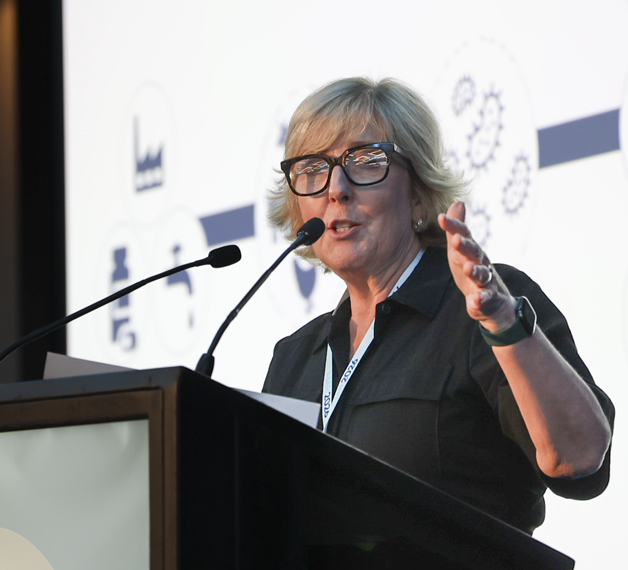
“AMR is no longer a distant public health issue; the takeaway for us investors is that it is a systemic financial risk that will be priced. The only question is when.”
Fiona Reynolds, President, FAIRR
FAIRR
FAIRR is a global investor network focused on the risks and opportunities in the food system, where antimicrobial resistance (AMR), climate change, biodiversity loss and human health intersect. This is the critical nexus where investors identify systemic risk and where capital markets ultimately respond. FAIRR represents more than 400 institutional investors globally, with approximately US$90 trillion in assets under management.
FAIRR provides practical, decision-useful tools explicitly linked to financial risk, including materiality briefs, company engagement questions, species-specific fact sheets, and stewardship guidance. The objective is to support investors to drive risk reduction, transparency and accountability in the companies and sectors they invest in.
Investor Action on AMR is a collaborative investor initiative founded by FAIRR, the Access to Medicine Foundation and the UK Government to galvanise investor action on antimicrobial resistance as a systemic risk to public health, economic stability and investment portfolios. The initiative coordinates collective investor engagement and policy signalling to strengthen global action on AMR.
AMR as systemic financial risk
AMR was characterised as a nonlinear systemic risk. Once antibiotics lose effectiveness, impacts cascade across sectors rather than remaining confined to health systems with the insight that approximately 10% of global equity markets are already exposed to AMR-related risk. Animal agriculture was identified as a high‑leverage, modifiable AMR risk, with antibiotic practices in livestock creating regulatory and reputational exposure that increasingly concentrates in restaurant and branded food supply chains. Resistant organisms do not remain contained within production systems, moving instead through food, water, soil and human populations creating regulatory, reputational and transition risks for companies and investors alike.
Despite this exposure, the discussion emphasised that AMR remains poorly understood across much of the investment community and is rarely treated as a core material risk alongside climate, biodiversity, food safety, or water. Limited awareness, technical complexity and fragmented data were identified as key barriers to investor action. Where AMR is addressed, it is often framed as a values-based issue rather than a question of financial risk management and fiduciary duty.

“Like climate change, AMR is material, foreseeable, and actionable now. That window for intervention does close … I do think we need policy change, but we shouldn’t use that as an excuse for waiting.”
Debbie Blakey, CEO, HESTA
The discussion also highlighted a less visible constraint on investor action: divergent interpretations of responsible investment. Some investors exclude parts of animal agriculture entirely based on ethical or sustainability mandates, focusing instead on themes such as plant-based diets, carbon or climate transition. While these approaches reflect legitimate values, they can also mean that some investors with strong sustainability credentials are not engaging with the very sectors where AMR risks are most acute. As a result, companies with significant exposure to antibiotic use may receive less scrutiny, not more. This dynamic is compounded by limited understanding of how AMR manifests across everyday products and systems from food and water to crop production and supply chains reinforcing gaps between investor intent and effective risk management.
The panel underscored the role of investor stewardship as a primary lever for change. Engagement with publicly listed companies particularly those that produce, rely on, or contribute to antibiotic use was highlighted as critical to improving disclosure, aligning practices with international guidelines, and reducing unmanaged risk in portfolios. Shareholder resolutions, collaborative engagement initiatives and the use of benchmarking and performance data were presented as practical tools to shift corporate behaviour.

“Nothing changes unless these risks are understood at board and investment-committee level like what we’ve done with climate change, with biodiversity … cybercrime, people are asking about it. AMR should be escalated to that level.”
Julie Orr, Non-Executive Director, SAAFE CRC and Australian Ethical Investments Ltd
Collaboration emerged as a central theme. Given the systemic nature of AMR, no single investor can mitigate the risk alone. Collective action through investor networks, shared data platforms and coordinated engagement was shown to amplify influence and credibility, particularly when underpinned by robust, comparable evidence. The session also drew parallels with climate risk, noting that delayed action increases costs and narrows the window for effective intervention.
While the focus was on risk, the discussion also identified investment opportunities. Innovation in diagnostics, vaccines, medical technologies, surveillance, prevention and precision use of antimicrobials offers pathways to reduce AMR while supporting productivity and resilience. However, panellists noted that many of these solutions face scaling challenges, reinforcing the need for patient capital, blended finance and supportive policy environments.

“When you have the collaborative power of investors behind the kind of data that we can produce, that’s really the power of change that you see.”
Jay Iyer, CEO, Access to Medicine Foundation
Actions and considerations for follow‑through to 2029
- Position AMR as a core material risk alongside climate, water and biodiversity in investment analysis and governance.
- Use active ownership tools, engagement, shareholder resolutions and voting, to improve disclosure and align corporate practices with WHO guidelines.
- Prioritise high-leverage sectors, particularly animal agriculture, pharmaceuticals, food production, water and healthcare supply chains.
- Strengthen investor collaboration, using shared data, benchmarks and coordinated engagement to amplify impact.
- Support policy action that reduces inappropriate antimicrobial use and creates consistent regulatory signals across markets.
- Allocate capital to AMRrelevant innovation, including diagnostics, prevention technologies, and stewardship-enabling solutions, recognising both risk mitigation and opportunity.
Session 7: Blended finance: moving capital in a constrained world
As global health needs grow and aid budgets tighten, blended finance offers a way to stretch scarce resources further. By using public or philanthropic funds to attract private investment, it can open new pathways for action on AMR and health system resilience.
Summary
This session explored how blended finance can unlock investment for AMR by reshaping risk, incentives and value creation, drawing lessons from climate, gender and animal health. Speakers stressed that AMR’s challenge is not a lack of science or solutions, but the absence of financial structures, products, and demand signals that translate those solutions into investable opportunities.
Blended finance adjusts risk–return economics

“Blended finance is about turning the impossible deals into possible and making the unfinanceable doable by using capital creatively rather than treating finance as neutral.”
Mona Basso, Strategic Advisor, Strategy & Governance
The discussion positioned blended finance as a tool for deliberately altering deal and market economics, rather than a permanent subsidy or an alternative asset class. Its function is to deploy concessional capital (e.g. first loss guarantee, lower return) in a temporary and targeted way to absorb early risk, prove commercial viability and crowd in private investment, with the clear expectation that it steps back rather than replaces markets. Even relatively small concessional commitments can materially reshape risk–return profiles and unlock far larger volumes of commercial capital, but only where there is a credible pathway to self-sustaining demand. For AMR, this requires moving beyond a compliance framing and treating investment as a value-creation proposition. Lessons from gender‑lens and climate finance show that interventions that are costs, even when beneficial, are rarely sustained, whereas those linked to productivity, resilience and competitive advantage, particularly in sustainable agriculture and export‑oriented systems, are more likely to persist and scale.
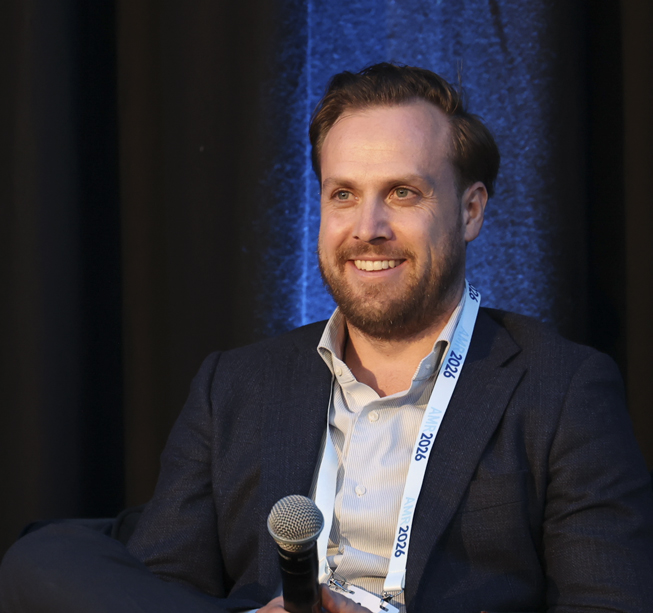
“If AMR stays a compliance exercise, it won’t last. The lesson from gender and climate is that it must be tied to value creation, otherwise it gets cut.”
Angus Kathage, Principal Advisor for Blended Finance and Investment, Australian Department of Foreign Affairs and Trade
The session emphasised that the core constraint is not a lack of solutions or willingness to change, but the absence of demand certainty and viable market design. Where predictable revenue signals exist through procurement mechanisms, export standards, insurance or compensation frameworks, farmers and producers are willing to invest in AMR-reducing practices. Where those signals are missing, even cost-effective technologies struggle to scale. This matters because proven, revenue-generating AMR solutions already exist. Animal vaccines, diagnostics, nutrition and precision livestock systems are commercially profitable, growing markets, yet their uptake is constrained by fragmented regulation, high upfront costs and uncertain demand rather than technical feasibility. Addressing these barriers also requires rethinking business models and how value is priced, paid for and rewarded. Experience from the health sector, including vaccines and advanced market commitments, demonstrates that reshaping demand can fundamentally alter R&D and investment economics. While there is clear scope for innovation in business models, the underlying reality remains that attracting capital ultimately requires credible returns.
A further lesson drawn from climate finance was the risk of overfocusing on large, easily packaged projects at the expense of smaller actors. While large projects can mobilise capital quickly, they often overlook the critical role of small firms, farmers and local distributors. The climate sector is now playing catchup in engaging small companies that help create a pipeline line of innovation through to lastm-ile delivery and adoption. The same lesson applies to AMR. Scaling effective practices will require attention not only to large producers or listed firms, but also to the local pipeline of innovation, where entrepreneurship is inherently contextual and place-based. Supporting entrepreneurs and small enterprises in emerging markets through financing structures tailored to their cultural, regulatory, and geographic realities was identified as essential to translating AMR science into durable, investable systems change.
A similar structural gap explains why One Health succeeds scientifically but fails financially. Budget lines, mandates and accountability remain siloed across human health, veterinary services and environmental portfolios, leaving prevention investments stranded between sectors. Investors, meanwhile, cannot allocate capital to what is not clearly defined. Across agriculture, water and climate funds, AMR rarely appears as a distinct product or lens. The implication is that AMR investment will scale fastest when embedded within existing value chains, supported by timebound concessional capital, clear revenue signals, and investable products that translate scientific solutions into financial propositions.
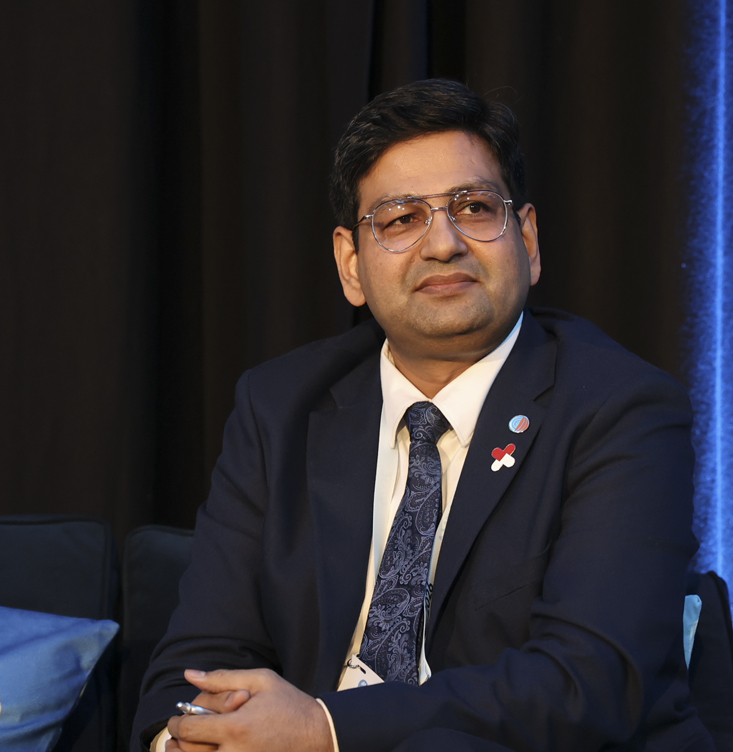
“One Health is scientifically right, but science alone is not viable. If there is no financial model, it falls through the cracks between budget lines.”
Rahul Srivastava, Public-Private Partnership Programme Manager,
Capacity Building Department, WOAH
Actions and considerations for follow‑through to 2029
- Design AMR-lens investment products that investors can readily understand and allocate funding towards.
- Use blended finance to derisk early market entry for proven animal health solutions in emerging markets.
- Align AMR with value creation narratives (productivity, resilience, export access), not compliance.
- Build cross-sector financing mechanisms that operate across human and animal/agricultural sectors and environmental budget lines.
- Focus on specific, investable interventions (vaccines, diagnostics, supply chains) rather than abstract AMR categories.
Read the other AMR 2026 reports
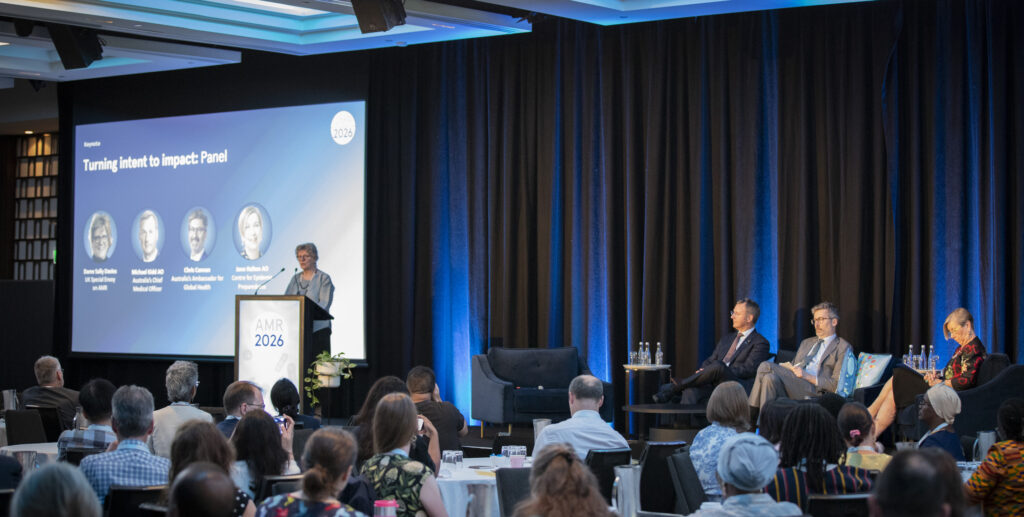
Theme 1: Political declaration: from ink to implementation
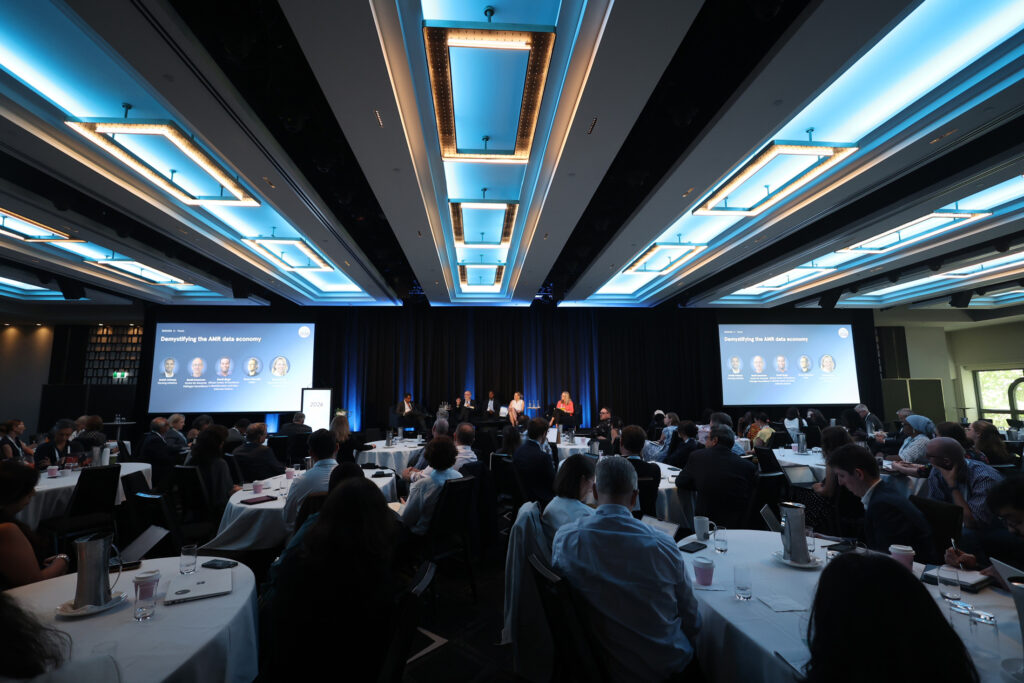
Theme 2: Data for decision-making
Theme 4: Standards, stewardship, and support
Theme 5: Solution ideation, innovation, and impact
Theme 6: Consumers, communications, and campaigns
Theme 7: Evidence, equity, and economics
Theme 8: Early education