- Session 13 – Session 13 – Myths, misinformation and misrepresentation: Empowered AMR communication
- Session 14 – Driven by facts, united by policy: Messaging to mobilise
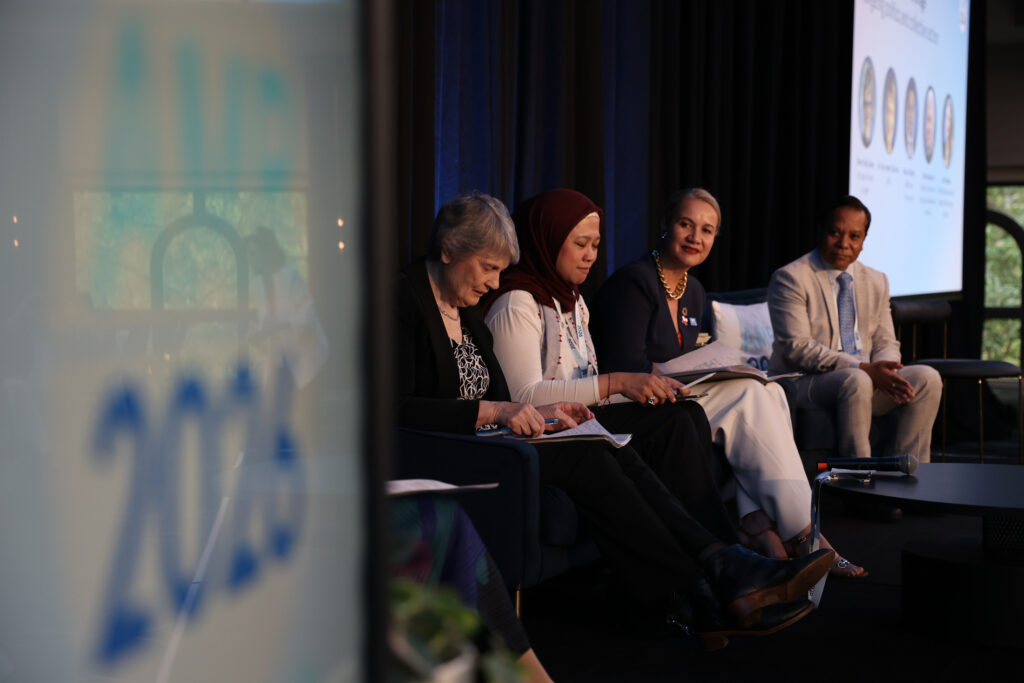
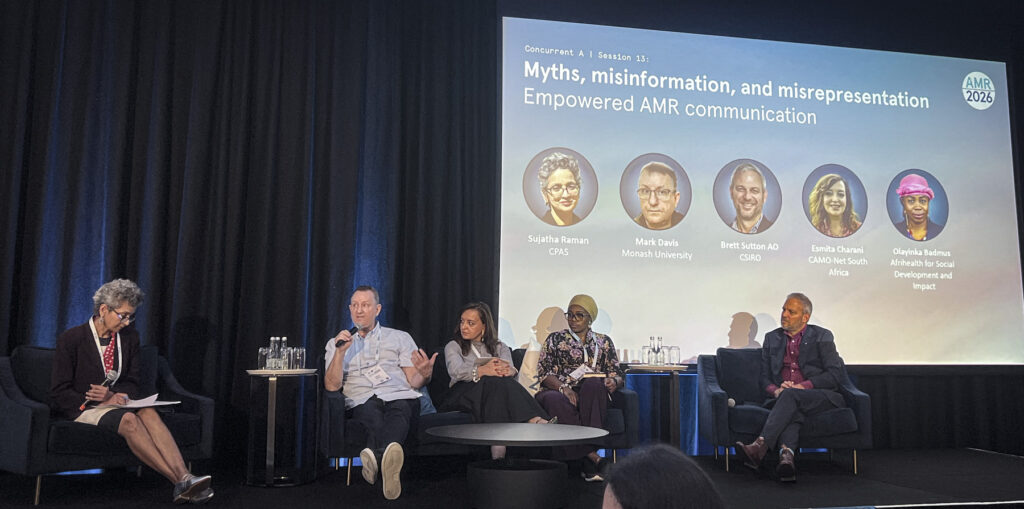
Session 13 – Myths, misinformation and misrepresentation: Empowered AMR communication
AMR communication is a delivery and impact constraint. The session presenters argued that much AMR messaging remains technocratic, overly universal, and mismatched to lived realities fuelling blame, reducing agency, and weakening trust. A communications reset was framed as essential to translate complex, cross‑sector AMR evidence into coherent narratives and clear calls to action that land in real decision-making settings.
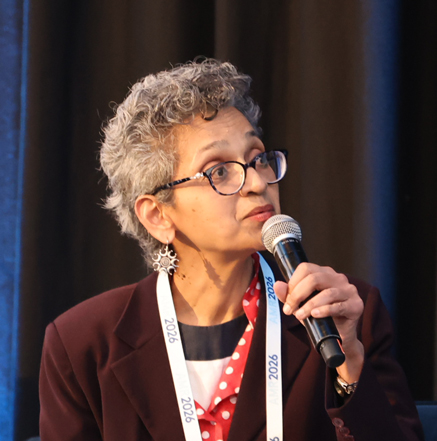
“Beyond these familiar calls for why we should act on AMR lie stubborn myths, mismatched assumptions, and stark inequities that dictate who gets blamed, who gets heard, and who can access effective care.”
Sujatha Raman, Director, CPAS, and UNESCO Chair-holder in Science Communication for the Public Good, ANU
Summary
The panel explored why AMR has struggled to cut through despite rising political attention. Communication challenges were linked to a broader erosion of trust in expertise and a crowded, polarised information landscape in which mis‑ and disinformation can move quickly and widely.
Rather than searching for the perfect term or a single universal framing for AMR, the discussion emphasised starting with audience priorities and constraints: what parents want, what patients with chronic infections need, what pet owners worry about, and what clinicians face when diagnostics take days. Communication was treated less as dissemination and more as a form of implementation design that can either enable or block action.
A further warning was that even well‑intended AMR narratives can inadvertently reduce public agency. Media coverage was described as dominated by a scientific discovery narrative that positions AMR as a story of discovering the crisis and then discovering the solution, casting publics as passive witnesses waiting for science to deliver, and risking future mistrust when discovery does not resolve the problem quickly.
Reframing messages to cut through and connect
A central proposed shift was to move away from individualised narratives of noncompliance and demand toward the systems and constraints within which choices are made.
“Do we have the right end of the telescope? We focus a lot on individuals for example noncompliance, demand, personal agency, but as a sociologist, I look at the systems people operate within, and the constraints that shape the choices available to them.”
Mark Davis, Medical Sociologist, Monash University
Speakers stressed that effective messaging is not just simplification; it requires translating evidence into language and frames that resonate with the audience’s hierarchy of risks and pressures they are already managing.
“Trust is an infrastructure; it connects policy to practice. We need to move from engagement and education to empowerment.”
Olayinka Badmus, Co-founder and Technical Director, Afrihealth for Social Development and Impact
This grounded the ‘technocrats speaking to technocrats’ critique in practical moments: decisions made under uncertainty in clinics, time and distance barriers in households, and communications that fail because they depict realities people do not recognise (e.g., promoting handwashing with a tap image in places where taps are not part of daily life).
A highlighted warning was that visual communication is not neutral. Stereotyped global health imagery can shape assumptions, normalise inequity, and signal who is seen as empowered versus powerless. The panel argued this is a sign of deeper bias in how scientific evidence is produced and applied.

“When we use images of people from low- and middle-income countries it is often images of women and children of colour who are given far less power, agency, dignity, and respect … this is just the tip of the iceberg.”
Esmita Charani, Co-Principal Investigator, CAMO-Net South Africa
Finally, the discussion positioned located AMR communication inside a harder information environment shaped by AI-enabled amplification, polarisation, and echo chambers, where compelling personal stories can be placed on the same pedestal as peer-reviewed evidence. In this context, trust was framed as earned and maintained through obligations and action, not just the right channel or slogan.

“We’re moving into an era that’s more complex and harder to fight than at any point in recent history. Social media and AI can now create and amplify misinformation at scale, while political polarisation, echo chambers, and global networks spread it almost instantaneously. In many ways, we’re losing that battle right now.”
Brett Sutton AO, Research Unit Director, Health and Biosecurity, CSIRO
Actions and considerations for follow‑through to 2029
- Reframe AMR away from individual blame toward the systems and constraints that shape choices (diagnostics, access, infrastructure, incentives).
- Design communication around lived realities: identify what specific groups value, fear, and prioritise, and tailor the ask accordingly.
- Invest in trustworthiness, be transparent about uncertainty, explain evidence generation, and avoid patronising messaging.
- Adopt ethical imagery standards across AMR and global health communications: dignity, consent, and agency should not vary by geography.
- Treat misinformation resilience as core infrastructure: create spaces for nuance (not only shortform content) and equip credible messengers for sustained engagement.
- Fund genuine codesign and community mobilisation (not half-built interventions seeking validation): local language, metaphors, and messengers should be set with communities, not appended later.
- Audit bias in the evidence pipeline: align communications equity with better demographic representation in clinical trials and datasets to avoid bias being amplified through analytics and AI.
Session 14 – Driven by facts, united by policy: Messaging to mobilise
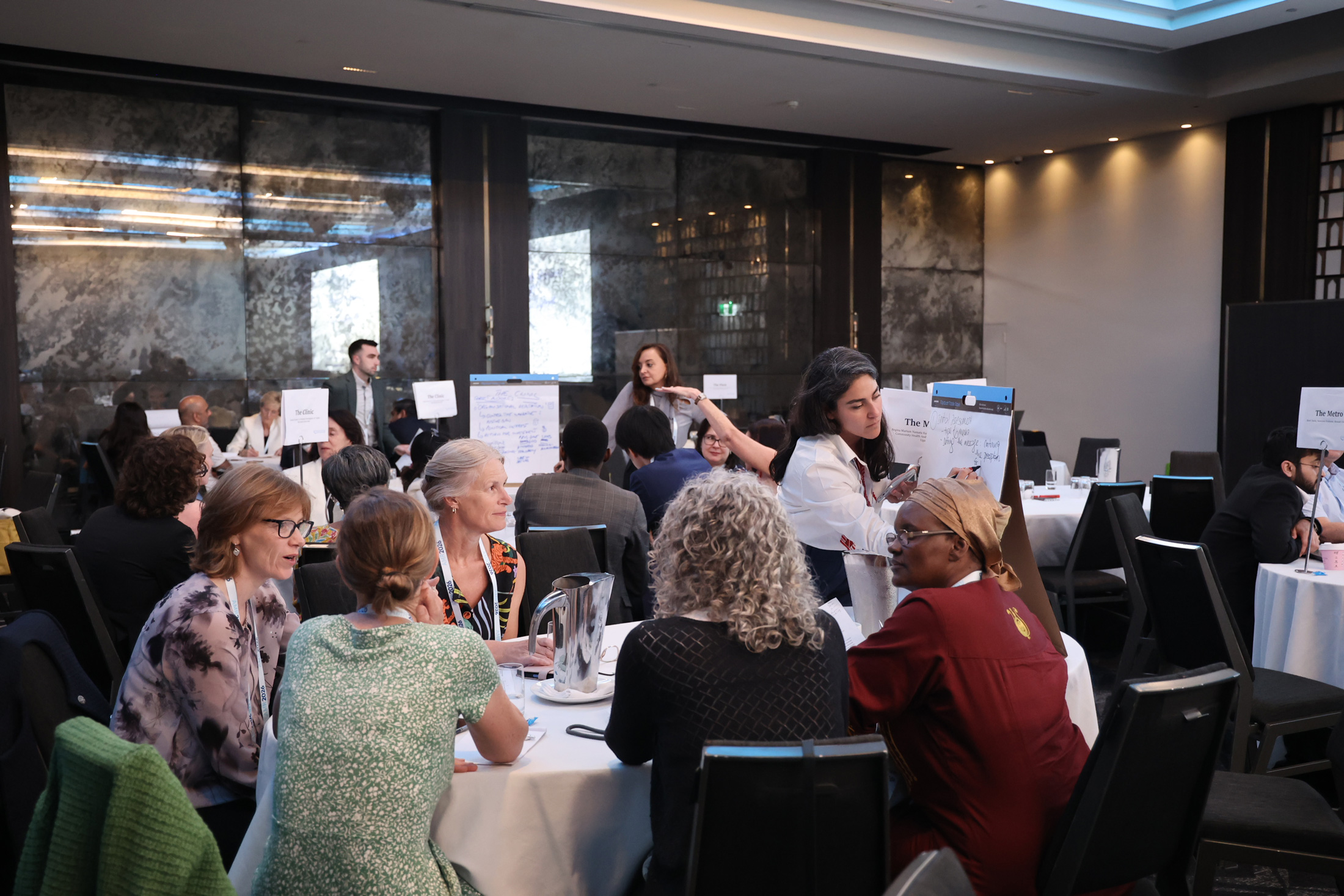
This workshop focused on strategic communication as a delivery tool, testing how AMR messages can be framed to drive concrete decisions, investment, and behaviour change across very different audiences. Designed as a ‘creative blitz’ aka hack-a-thon , the session used real‑world scenarios to stress‑test the UN Foundation’s AMR Messaging Guide and explore how coherence, audience insight, and incentives shape impact. The workshop was grounded in a central premise: decisions are driven by narratives as much as evidence, and fragmented or overly technical messaging risks stalling action. Participants were challenged to treat communication not as dissemination, but as a form of intervention design.
“Decisions are not made in a vacuum. They are driven by the messages we choose, the narratives we build, and the evidence we provide. If we don’t align our demand signals, we can’t expect others to follow.”
Cecilia Mundaka Shah, Vice President of Global Health Strategy, United Nations Foundation
Participants worked across five scenario groups, each representing a highstakes decision point where communication was the binding constraint.
- Scenario 1 Clinic (Hospital outbreak response)
A dangerous CRE spike in a hospital forces an administrator’s action.
In this scenario, participants framed an Intensive Care Unit (ICU) outbreak as a governance and investment challenge, rather than a purely clinical one. A hospital CEO faced an urgent decision to reallocate $150,000 originally budgeted for electronic billing toward weekly hand hygiene compliance reporting and enhanced microbiology diagnostics to identify CRE cases. The central communication task was how to justify this shift to the executive team. While there was debate about whether mortality data would resonate with senior leadership, the group converged on the view that executives are more consistently motivated by organisational risk, reputation, and return on investment. Messaging therefore emphasised how improved hand hygiene could reduce ICU infections, shorten length of stay, and deliver downstream cost savings, while external reporting would strengthen transparency, accreditation, and institutional credibility in a politically sensitive government setting. Overall, framing the intervention through a financial, governance, safety, and accountability lens was seen as more persuasive than relying on clinical outcomes alone.
- Scenario 2 Ministry (Finance decision-making)
A civil servant builds a case for AMR in the national budget.
This scenario treated AMR as a budget and political-choice problem, not a technical argument. Teams were asked to persuade a Minister of Finance to fund a Water, Sanitation and Hygiene (WASH) action plan even when it competed with a president’s preferred priority (digital ID). One strand of the pitch deliberately reframed WASH as a political win a ‘softer entry point’ that could deliver visible benefits, strengthen public trust, and support reelection through alignment with voter interests, while also reducing longer-run costs and strengthening security narratives. Another strand leaned on human rights and global commitments, using the country’s signed obligations to legitimise the spend and widen the constituency beyond health. Both approaches converged on the need to speak in return on investment terms, show how WASH can unlock partner investment, and anchor the case in community level data to target need and demonstrate impact.
“To convince the finance minister, we assumed it had to be cost-effective, politically attractive, and able to deliver visible gains in health, security, and public support at the same time.”
– Diah Saminarsih, Founder, Center for Indonesia’s Strategic Development Initiatives
- Scenario 3 Pitch (Shareholders and investors)
Skeptical shareholders challenge a switch to reduce use of antibiotics for animal growth promotion
This scenario positioned AMR as material business risk and tested how to sell a costly transition to a sceptical shareholder audience. The task assumed a five percent production cut over 18 months with an estimated $50 million cost, requiring a narrative that prioritised the cost of inaction: regulatory tightening, consumer trust, food safety, reputation shocks, and future supply chain disruption. The group concluded that many investors have low AMR literacy, so messaging should avoid jargon, translate the issue into profits, risk, resilience, and market positioning, and tailor packs for different investor types (responsible investors versus purely financial audiences). A key lever was demonstrating potential premium pricing and market upside from health trend demand, alongside peer pressure logic as being a late mover carries its own competitive penalty. Several participants suggested leading with ‘biosecurity’ rather than ‘AMR’ to keep the pitch commercially legible.
“If there’s a five percent production cut over the next eighteen months, the question is whether we can offset that by unlocking premiums, so positioning a premium product for consumers and capturing health trends. There’s a real shift toward more nutritious and healthier choices, and that can be a profit driver. The other part is how we pass some of those costs through to consumers.”
– Moana Nottage, Senior Responsible Investment Analyst, Alphinity Investment Management
- Scenario 5 Plant (Pharmaceutical wastewater)
A pharmaceutical company debates their role in wastewater mitigation
This scenario focused on how to engage a pharmaceutical company on wastewater emissions using trust‑building and credible evidence, not confrontation. Teams prioritised creating a shared foundation for dialogue empathising with operational pressures, surfacing internal differences (scientists vs bottom‑line roles), and being explicit about what monitoring data does and does not prove. One group framed the conversation as a consultancy‑regulator engagement, emphasising confidentiality and experience to reduce defensiveness, and proposed joint monitoring early to align on facts before reverting to independent oversight. The core message linked environmental emissions to the company’s own interests: antibiotics are a finite asset, and declining effectiveness ultimately threatens product value and future revenue. Alongside reputational risk and ESG expectations, the pitch emphasised that ‘doing nothing is not an option,’ while offering flexibility on timing and staged controls under a strong regulatory framework, including consequences for non‑compliance and pathways for negotiated implementation.
“Even if the issue doesn’t appear to be in your own manufacturing plant today, this is a collective problem. The long‑term sustainability of antibiotics affects everyone, and being proactive protects brand credibility, reputation, and competitive advantage.”
– Sujatha Raman, Director, CPAS, and UNESCO Chair-holder in Science Communication for the Public Good, ANU
- Scenario 6 Metro (Public behaviour change)
This scenario tested ultra‑short public communications: a three second digital billboard encouraging people to finish an antibiotic course. Two groups independently converged on simple, repeatable creative logic: ‘finish what you started,’ using a visual metaphor of a runner stopping short of the finish line, with a link (e.g., finishthecourse.org) for more information. The concept was designed to be culturally adaptable (different sports, different audiences including children and people with disability) and intentionally light‑touch by avoiding technical AMR framing and fear‑based messaging. Variants extended the metaphor to everyday tasks (half‑baked cake/bread; incomplete colouring for kids) to make the call‑to‑action intuitive and memorable. The underlying insight was that behaviour change at scale depends on clarity, positivity -not fear-based framing, and recognisable cues, with complexity moved to a secondary channel rather than loaded into the billboard itself.
“Picture an Olympic sprinter charging toward the finish line, the crowd cheering … then stopping just short. You wouldn’t do that. You finish the course. That idea works everywhere: a running track, an F1 circuit, any culture, any setting. It can be a woman, a man, a child, someone in a wheelchair but when you’re winning, you don’t want to (prematurely) stop.”
– Mark Davis, Medical Sociologist, Monash University
Cross-cutting insights
Across all five groups, common principles emerged:
- Audience specificity matters more than message volume.
- Economic, political, and reputational incentives consistently outperformed technical arguments.
- Positive, solution-oriented framing was more effective than problem-led messaging.
- AMR language itself is often a barrier and must be translated or avoided depending on the audience.
- AMR Messaging Guide and other tools can provide vital direction.
Read the other AMR 2026 reports
Theme 1: Political declaration: from ink to implementation
Theme 2: Data for decision-making
Theme 3: Investing through an AMR lens
Theme 4: Standards, stewardship, and support
Theme 5: Solution ideation, innovation, and impact
Theme 7: Evidence, equity, and economics
Theme 8: Early education