
- Session 2 – Demystifying the AMR data economy
- Session 3 – Inside the Independent Panel: Evidence for action in a fragmented world
- Session 4 – Beyond boundaries: Tackling the proprietary and privacy hurdles in AMR data sharing
Session 2 – Demystifying the AMR data economy
Data is central to effective AMR action, yet much of the information generated globally remains fragmented, inaccessible, or underused. This session explored how surveillance, analytics, and governance can move beyond data accumulation to deliver insight, accountability, and real-world impact across human, animal, and environmental health.

Summary
Panellists examined the promise and limits of the emerging AMR data economy, emphasising that data alone does not drive change. While surveillance systems have expanded, especially following COVID19, gaps remain in coverage, integration, and translation into policy and practice. The discussion highlighted that the central challenge is not generating more data, but aligning infrastructure, incentives, and governance so data flows to where decisions are made and benefits those bearing the highest burden of AMR.
The session reinforced that effective AMR data systems must be purpose-driven. Surveillance is most valuable when it is embedded within existing health and regulatory systems, responsive to local context, and explicitly linked to action whether that action is infection control, stewardship, investment decisions, or prevention upstream of clinical settings. Fragmentation across sectors and between public and private actors continues to constrain visibility of the full AMR landscape, particularly in animal health and community settings.

“Data needs to inform a decision … there needs to be an action that comes with it. When I’m thinking about data integration it should only happen really when there’s a decision at the end.”
Teresa Wozniak, Research Team Leader and Principal Scientist, Australian e-Health Research Centre, CSIRO
Collection to consequence
AMR data systems were repeatedly framed as valuable only when they are built around decisions rather than datasets. Data integration and surveillance were treated as means to an end supporting clinical action, public health response, and investment not as an output in themselves. A key concern was the risk of extractive models, especially as AI accelerates, where data is removed from high‑burden settings without delivering local benefit, reinforcing the importance of trust, reciprocity, and governance in data sharing arrangements.

“Surveillance is the cornerstone of action. We can’t fight things that we don’t know are there … You can’t build models on crappy data.”
David Aanensen, Director of the Centre for Genomic Pathogen Surveillance, Pandemic Science Institute, University of Oxford
The discussion emphasised that granularity and context determine whether surveillance triggers intervention. An example from the Philippines illustrated how routine sentinel surveillance can be paired with selective sequencing: phenotypic patterns are reviewed regularly, and genomics is triggered to confirm whether cases represent a true outbreak or unrelated events. This ‘spot‑and‑stop’ approach was presented as a pragmatic way to embed new technology into existing systems, maximising impact under real funding constraints and enabling concrete infection control action, including outbreak interruption in neonatal units.
A post‑pandemic comparison underscored both what is technically feasible and what remains under‑mobilised for AMR. COVID‑era sequencing proved that rapid global scale‑up is possible where around 35 million genomes were sequenced in three years, yet that capability has not translated to AMR. Across all priority drug-resistant pathogens over the last 20 years, there are only about half a million high‑quality publicly available genomes, leaving massive gaps. The implication for AI and advanced analytics is that they will only be as useful as the surveillance, implementation and data quality beneath them, so routine systems need strengthening first, with precision tools layered in where they deliver local decision value.
Across One Health, the session highlighted structural blind spots created by where data sits and who pays to mobilise it. Animal health was described as multiple sectors (across different species and industries) rather than a single system, which makes integration within animal health a prerequisite for wider One Health linkage. In the UK, most susceptibility testing data never reaches national surveillance, leaving major visibility gaps. The binding constraints are practical: diverse testing methods and interpretive criteria, incompatible laboratory management systems, and the time and cost burden of extracting and sharing data. There’s a need for approaches that focus on lowering friction (accepting data in whatever formats can be exported, centralising cleaning and standardisation) and creating value propositions for data holders (including tailored benchmarking), rather than relying solely on mandates.

“The veterinary sector in the UK is entirely privatised, so most AMR testing happens in private labs. Over 90% of those results never reach national surveillance … extracting the data or sharing isolates for validation takes time and money.”
Tamsin Dewe, Strategic Lead for National Biosurveillance Network, Veterinary Medicines Directorate
A complementary UK example showed how integrated AMU and AMR data can sustain voluntary behaviour change by demonstrating results back to stakeholders. Voluntary antimicrobial stewardship leading to a 57% reduction in antibiotic use in food‑producing animals over the past decade were linked to the ability to show commensurate reductions in resistance across monitored organisms and antibiotics, helping maintain engagement and willingness to act. The session also cautioned against ‘perfect system’ paralysis: integration does not require an all‑encompassing platform, and simpler approaches may be more feasible and still decision‑useful, especially in resource‑constrained settings.
Behavioural and economic dimensions were repeatedly highlighted as the missing link between data and outcomes. Prescribing and dispensing decisions were described as being shaped by expectations, affordability constraints, and substitution at the point of sale as much as by clinical guidance. Participants argued that AMR data must therefore be translated into incentives and economic narratives that resonate with finance ministries, companies, and communities, while also reframing AMR within upstream system drivers including housing, WASH, food production, and access to care where prevention opportunities are greatest.

“I’m a bioinformatician, but how much social and cultural knowledge do I need? How much do I need to understand the political and economic environment? We need to think about how we train and equip people not just to analyse data, but to derive insights around interventions.”
Daudi Jingo, Director, African Center of Excellence in Bioinformatics and Data-Intensive Science
Actions and considerations for follow‑through to 2029
- Design AMR data systems around decisions and users, ensuring surveillance outputs directly inform clinical practice, policy, and investment.
- Strengthen integration across One Health, including incentives and trusted mechanisms for engaging private laboratories, pharmacies, and veterinary services.
- Invest in foundational capacity, including digital infrastructure, laboratories, and interdisciplinary workforce training that bridges technical, economic, and social expertise.
- Improve data granularity and contextualisation, enabling targeted responses to specific pathogens, settings, and populations.
- Embed reciprocity and local benefit into data governance, ensuring countries and communities generating data see tangible returns.
- Avoid ‘perfect system’ paralysis, prioritising practical, incremental integration over complex platforms that delay action.
- Use combined AMR and antimicrobial use data to sustain behaviour change, demonstrating impact and maintaining stakeholder engagement.
Session 3 – Inside the Independent Panel: Evidence for action in a fragmented world
The new Independent Panel on Evidence for Action against AMR aims to bring clarity to a fragmented landscape providing impartial, rigorous assessments of what truly works. This session explored how the panel can move from concept to reality: balancing independence with broad representation, aligning diverse surveillance systems, and giving governments and funders the evidence they need to prioritise, invest and scale effective AMR solutions in a resource‑constrained world.
Summary
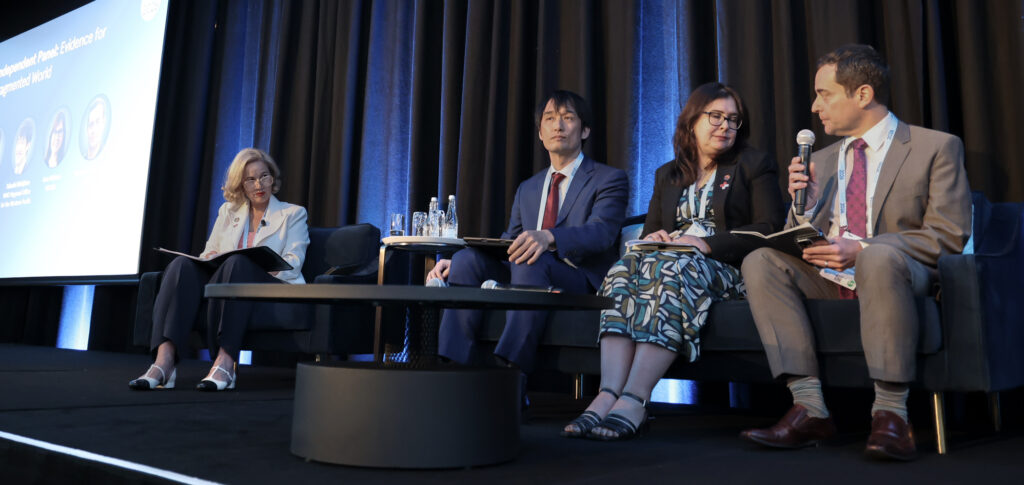
This session drilled into the practical question underpinning the proposed Independent Panel on Evidence for Action on AMR (IPEA): not whether evidence exists, but how it is collected, prioritised, and translated so that it can be used by countries facing tight fiscal, workforce, and political constraints. With perspectives spanning human health, animal health, and the environment, the panel tested how a global science–policy interface can move from aspiration to execution.
Analysis to Action
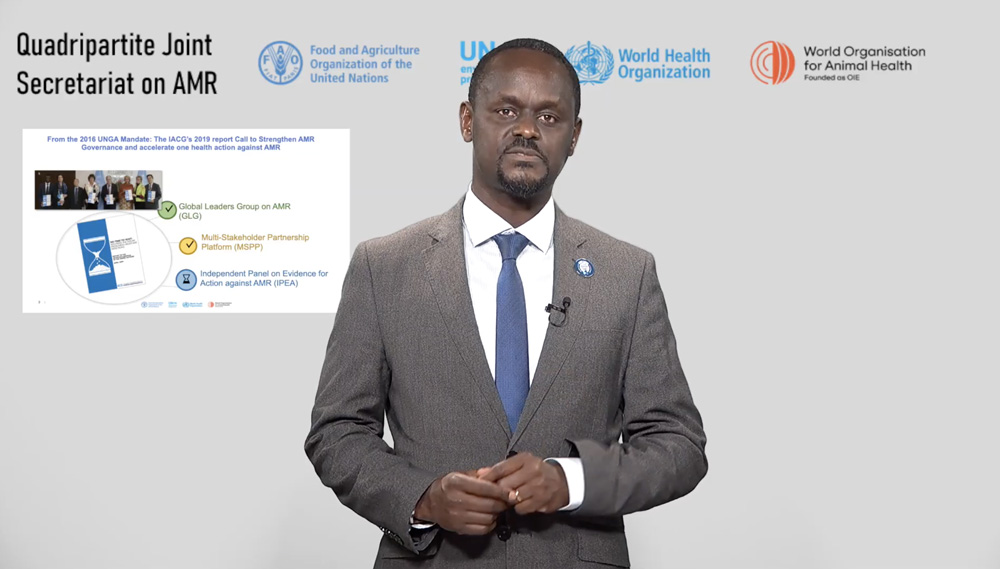
Jean‑Pierre Nyemazi provided a brief update on the establishment of the Independent Panel on Evidence for Action on AMR (IPEA), situating it within a decade‑long evolution of global AMR governance. He traced the journey from the 2015 Global Action Plan and the 2016 UN General Assembly High‑Level Meeting through successive ministerial conferences, culminating in the creation of the Quadripartite Joint Secretariat to improve coherence across human, animal and environmental sectors. He explained that gaps identified in the 2019 Inter-Agency Coordination Group (IACG) on AMR report, which was fragmentation, weak accountability, and insufficient use of evidence, led to the development of three complementary mechanisms: the Global Leaders Group (political advocacy), the Multi-stakeholder Partnership Platform (broad collaboration), and the IPEA, which will serve as the independent scientific engine of the system. Mandated by the 2024 UNGA declaration, IPEA is designed to provide authoritative, cross‑sectoral evidence synthesis, avoid duplication, and deliver actionable recommendations to support Member States. Nyemazi noted that draft documents are being revised following Member State consultations, with the panel expected to become operational and feed into political forums and governing bodies, most importantly to inform national decision‑making.
“The GLG is about political voice, the MSPP is about broad engagement and collaboration, and the IPEA is about independence, evidence, foundation. Together they strengthen the global AMR governance across evidence, collaboration, and political leadership.”
JP Nyemazi, Quadripartite Joint Secretariat on AMR and Global Coordination and Partnership at WHO
A central theme was practical policy relevance in the face of concrete constraints at ministry level, which include limited funding, limited health workforce, and competing demands. What countries need, the panel argued, is not only high-level global analysis, but evidence that is actionable and adaptable. That implies recommendations framed as clear, implementable options, not just programme descriptions, and built with enough flexibility that countries with different capacities and financial situations can adapt them to their own context.
The discussion then identified three major evidence gaps that countries are asking help with, particularly across the Asia-Pacific. First, with political goals now including a 10% decrease in mortality due to bacterial AMR by 2030, it will be necessary to have robust national-level methodologies for AMR mortality and disease-burden estimation standardised, but still adaptable to different country contexts.
Second, while challenges in surveillance data remain well known (including limited testing capacity and issues with data quantity and quality), a recurring request from Member States is practical guidance on how to use surveillance findings to inform policy, and to translate them into clinical management, not only how to generate better data.
Third, despite the emphasis on One Health, there is a need for more integrated evidence to better characterise and quantify transmission pathways and impacts across humans, animals and the environment, to strengthen coordinated action and investment.

“… there are three areas where IPEA could support countries: AMR disease burden, practical use of surveillance data, and more integrated evidence on One Health transmission and impact. Together, these would significantly strengthen implementation gaps across the Asia-Pacific and beyond.”
Takeshi Nishijima, Technical focal point for AMR, WHO Regional Office for the Western Pacific
A further thread focused on how the panel sets its work programme specifically the need to define prioritisation criteria. The discussion noted the tension between what the scientific community may see as priorities and what policymakers and politicians prioritise according to national needs and argued for an approach that explicitly builds in equity, so priorities reflect what is important for low and middle-income countries, not only what high-income countries perceive as the needs.

“(The most critical aspect of IPEA) is how we define the prioritisation criteria for the work programme in a way that supports policymaking. We need to look beyond what the scientific community or highincome countries perceive as important and ask what are the most important areas of work that might bring the biggest impact in addressing AMR at the global, regional and country level.”
Ana Mateus, Senior Scientific Coordinator, Antimicrobial Resistance and Veterinary Products Department, WOAH
The conversation also addressed participation and trust, including the practical challenge that significant AMR-relevant data sit with private laboratories across sectors (including companion animals and livestock, and in some contexts human private labs). The panel described governance mechanisms intended to enable engagement while safeguarding independence such as terms of reference, rules of procedure, and defined ways of engaging with private sector partners (for example, observer roles or specific agreements to support data sharing) alongside mechanisms to address conflicts of interest and avoid loss of trust from governments.
In considering design lessons, participants noted that the Quadripartite analysed existing science–policy panels to draw lessons from what works and what should be done differently. The discussion also distinguished consultation from negotiation as a factor affecting speed, noting that this approach has enabled relatively rapid development, with an operational launch anticipated before June.

“Ahead of drafting the documents to establish the IPEA, we together with the Quadripartite, analysed existing science–policy panels and draw lessons from what works and what should be done differently. From the IPCC, it was clear that credibility, inclusiveness, transparency and a clearly defined mandate are the foundations of a successful global science–policy panel.”
Ludovic Bernaudat, Head, Knowledge and Risk Unit, Chemicals and Health Branch, UNEP
Finally, the environmental dimension was used to illustrate implementation realities: Member States were described as not wanting new, separate systems, but wanting information that feeds into existing platforms. A concrete country example underlined why plug‑in solutions can fail where basic infrastructure is missing: one country of around 100 million people reports that only 5% of wastewater is connected to sewage and 10% of overall wastewater is treated.
Actions and considerations for follow‑through to 2029
- Design for usability: Structure IPEA outputs as decision-ready options, with explicit adaptation pathways for different country capacities rather than single global prescriptions.
- Translate surveillance into decisions: Prioritise guidance that shows how existing surveillance data can directly inform policy choices and clinical practice, not just reporting.
- Standardise what matters most: Develop and socialise adaptable methodologies for national AMR burden and mortality estimation to support both policy decisions and sustained political advocacy.
- Hardwire equity into prioritisation: Make transparent, equity-weighted criteria central to IPEA’s work programme selection, ensuring relevance for low and middle-income countries.
- Strengthen trust through governance: Establish clear rules for private-sector engagement, conflict-of-interest management, and communication, protecting independence while unlocking critical data and expertise.
Session 4 – Beyond boundaries: Tackling the proprietary and privacy hurdles in AMR data sharing
As AMR surveillance expands across sectors, questions of trust, consent and control are becoming harder to ignore. The discussion explored the practical and political barriers to sharing sensitive human and animal health data, from commercial constraints to protecting communities in an AI‑enabled world. It examined how governance, infrastructure and partnership can enable data use without eroding trust or equity.

Summary
This session centred on the deceptively simple idea of data sharing and the more difficult questions beneath it: who gets seen, who gets heard, and who ultimately benefits when data about people, animals and communities is collected, shared and reused. Panellists argued that many apparent data gaps are not technical, but stem from power, permission, and social licence acknowledging that these pressures are intensifying as AMR data becomes more valuable, more linkable, and increasingly reused in AI‑enabled environments. The underlying challenge is no longer whether more data can be collected, but whether people trust the accuracy of that data and the ways it is governed, accessed and interpreted.
From data quality to inequality
A key conversation thread was data quality at the frontline, and what happens when the burden of collection is placed on people with limited support. The discussion described community health workers as the first point of contact in many settings and a primary feeder into national systems. They are often working with paper registers, logbooks, and referral notes but low literacy, complex indicators, and heavy reporting load can lead to inconsistent collection, confusion, and ultimately data fabrication when expectations outstrip capacity. What emerged was not a critique of workers, but a systems lesson, which is that quality is inseparable from training, mentorship, and sustained engagement, and these are often the first activities cut when funding tightens. The session offered a concrete implementation insight: one off orientations are not enough without ongoing support. It also revealed that showing frontline workers how their data travels into performance review meetings and national decisions can shift understanding and motivation.

“The first risk is the loss of trust, because once trust is lost it is very, very difficult to bring it back. Another risk is stigmatisation of a community when data is misrepresented. When communities gain trust, they will tell you exactly what is happening, but when trust is missing, the data does not reflect reality and that affects the decisions made at the highest level.”
Regina Kamoga, Executive Director for Community Health and Information Network (CHAIN), Uganda
A second thread examined statistical invisibility and the structural consequences of weak identification in datasets. The panel argued that when populations are under‑identified or inconsistently recorded, estimates become biased which affects disease incidence, survival, and mortality rates through misclassification and denominator instability. The impact is not only technical: distorted estimates flow through to misdirected policy and resource allocation, and they weaken accountability because problems become harder to measure and act upon. Crucially, the discussion stressed that making disparities visible is only a first step and does not, by itself, change outcomes.
From there, the conversation moved to data governance. While privacy safeguards individual data, it does not resolve questions of authority such as who sets the questions, defines variables and categories, approves reuse, interprets findings, and determines who benefits. The panel described a three‑tier view of governance: tier one (compliance) covers consent, privacy, data sharing and access; tier two (methodological integrity) covers identification and metadata standards, linkage and validation; and tier three (stewardship) covers decision rights over secondary use, interpretation and benefit. This matters even more in genomics and AI contexts, where systems trained on biased administrative data can reproduce inequity at scale.

“Privacy is necessary. We also know that it alone is not sufficient. Governance on the other hand determines authority in decision making … De‑identification alone is not sufficient. For Indigenous peoples, the risk is not only the re‑identification of an individual; the risk includes collective harm and intergenerational harm … you can remove names and still generate biased conclusions about communities.”
Kalinda Griffiths, Director of Poche SA+NT, Flinders University
Industry realities were tackled directly. The panel pushed back on ‘just share the data’ as an unrealistic ask, particularly in animal health where datasets are distributed across veterinarians, governments, and companies, and where sharing decisions are shaped by legal duties, commercial value, and the risk of deliberate misinterpretation. Examples were used to show how thin evidence can inflate into a media storm, creating reputational harm and setting trust back years. At the same time, the discussion acknowledged the public legitimacy challenge when stakeholders perceive opacity as something to hide and noted that some animal antimicrobial sales data are already reported and publicly available, even if imperfect and difficult to integrate.

“… it’s useful to be specific about what data we’re actually talking about. In animal health, (antimicrobial) use data is held by veterinarians; surveillance data may be held by governments and biosecurity departments; and sales data may be held by companies. So, there’s little bits of data in various parts of the system and sharing any one component might not give you a comprehensive understanding to answer a policy question.”
Ben Stapley, CEO, Animal Medicines Australia
Finally, the panel reframed ‘trust at scale’ as infrastructure, meaning that it is not a one-off consent transaction, but a durable system of standards, secure environments, authorised access, and metadata that travels with data to automate permissions and conditions. The Five Safes model was positioned as a practical portfolio approach (safe people, safe projects, safe settings, safe data, safe outputs), and data spaces as an emerging way to enable sharing while keeping custodians in control through rulebooks, standard agreements, and technical connectors that enforce conditions based on metadata. The session closed with a strong synthesis: social licence depends on whether people feel seen, protected and respected; whether consent keeps pace with reuse and AI; whether commercial realities are acknowledged; and whether communities are treated as partners, not sources.

“All of us have to work towards getting the metadata right … we’re drowning in data; we’d be better off with less data that we can use more effectively.”
Rosie Hicks, Chief Executive, Australian Research Data Commons (ARDC)
Actions and considerations for follow‑through to 2029
- Treat trust as infrastructure: Move from one-off consent to durable governance that supports discovery, access, interoperability and reuse, especially in AI-enabled environments.
- Invest in data quality where it’s made: Protect training, mentorship, and data-quality checks for frontline collectors (and make the “why” visible by linking community data to decision forums), rather than cutting engagement first when funding tightens.
- Embed authority, not just privacy: Pair privacy controls with stewardship mechanisms that define who decides, who interprets, and how benefits flow, including Indigenous data governance aligned to CARE Principles (Collective benefit, Authority to control, Responsibility, Ethics), so trust is built through authority in the data architecture, not just masking identifiers.
- Build safe access pathways that fit sector realities: Use accredited frameworks (e.g., Five Safes / secure environments / authorised users) and standardised metadata to enable analysis without forcing blanket disclosure of sensitive or commercial datasets.
- Operationalise data spaces for One Health: Develop rulebooks, standard agreements, and technical connectors so custodians retain control while conditions are enforced automatically thereby reducing friction and cost for cross-sector sharing.
Read the other AMR 2026 reports
Theme 1: Political declaration: from ink to implementation
Theme 3: Investing through an AMR lens

Theme 4: Standards, stewardship, and support

Theme 5: Solution ideation, innovation, and impact
Theme 6: Consumers, communications, and campaigns

Theme 7: Evidence, equity, and economics
Theme 8: Early education