- Session 21 – Next‑Gen AMR: Youth leadership for One Health action
- Closing Keynote Session – Lessons, leaders, and leverage: Navigating politics and collective action
Session 21 – Next‑Gen AMR: Youth leadership for One Health action
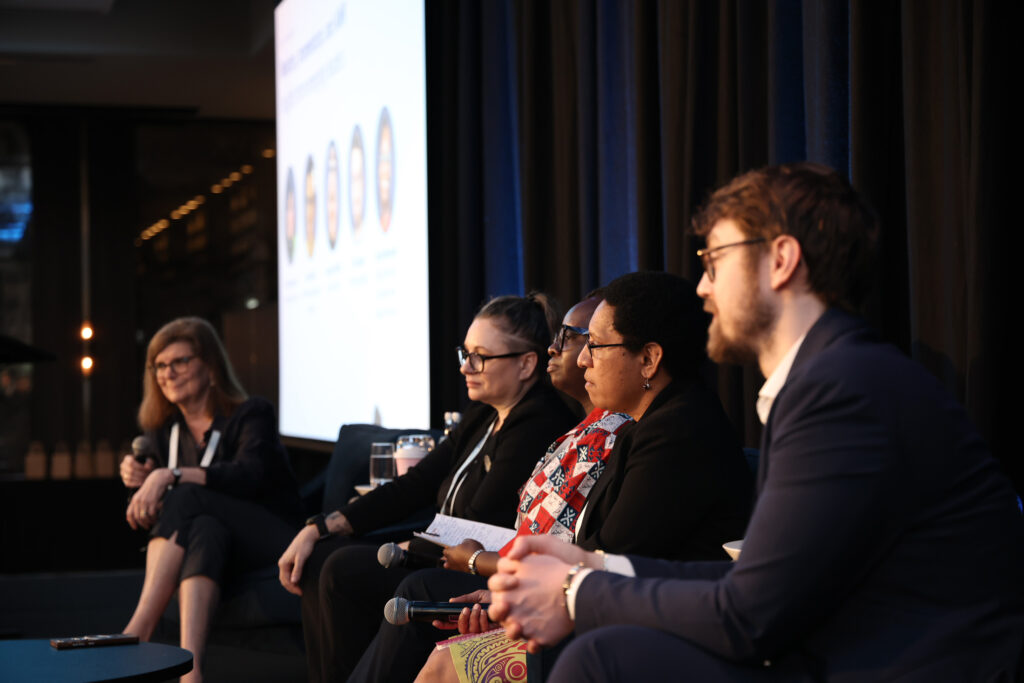
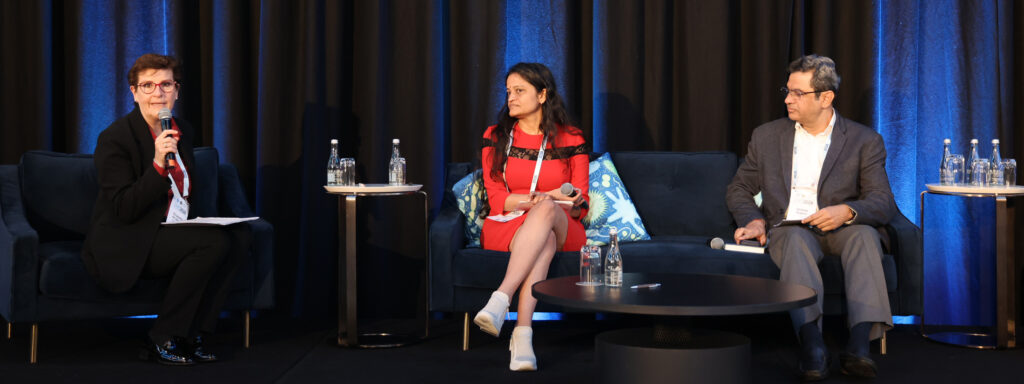
Representatives of the Quadripartite Working Group on Youth Engagement spotlighted youth‑led initiatives across regions, from grassroots stewardship drives to data‑savvy campaigns that shift prescribing norms. The session demonstrated what authentic youth engagement looks like when it is designed to influence decisions rather than simply add voices and how to back it with resources, metrics, and seats at the table.
Summary
Session 21 positioned young people as active contributors to AMR solutions across One Health systems, not just future stakeholders. The discussion showed how youth‑led initiatives are already influencing behaviour, policy, and practice when engagement is built to share power rather than simply collect voices.
Examples spanned regions and sectors—from community‑led water, sanitation, and hygiene interventions near schools and livestock markets, to urban campaigns tackling unsafe antimicrobial disposal, self‑medication, and biosecurity risks. Several of these youth‑led initiatives were supported through The Trinity Challenge, which provided seed funding and a global platform for young teams to test, adapt, and scale One Health interventions grounded in local contexts.
These initiatives demonstrated how young people combine local credibility, social science insight, and digital fluency to reach communities that formal systems often struggle to engage. Campaigns were tailored to context and language, built with communities rather than for them, and measured not only by reach, but by changes in practice such as improved hygiene behaviours, safer disposal of antimicrobials, and strengthened biosecurity awareness among farmers.
A central message was that meaningful youth engagement requires more than enthusiasm. Effective initiatives were backed by mentorship, modest but flexible funding, and platforms that enabled youth to co‑design interventions, evaluate impact, and share tools openly for replication. Where youth had access to decision‑makers, through civil society partnerships, health facilities, or government engagement, their work shifted from awareness‑raising to sustained action.
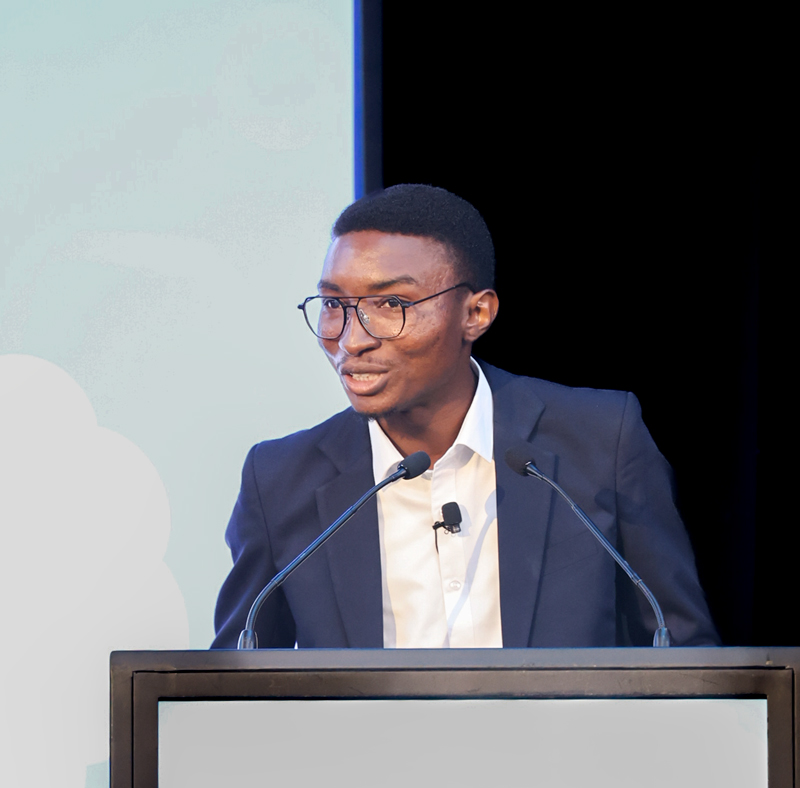
“If we want the AMR response to be sustainable beyond our generation, youth engagement has to be participatory and resourced, not symbolic. Otherwise, we lose relevance, innovation, and long‑term impact.”
Damilola Adesuyi, Program Officer – Public Health, One Health and Development Initiative
The session also addressed persistent barriers: tokenistic participation, limited funding pathways, weak monitoring and evaluation, and fragmented opportunities across sectors. Youth engagement, the speakers argued, must be built deliberately into national AMR responses, with clear roles, accountability, and feedback loops. When youth leadership is embedded by design, AMR responses become more adaptive, inclusive, and resilient over time.
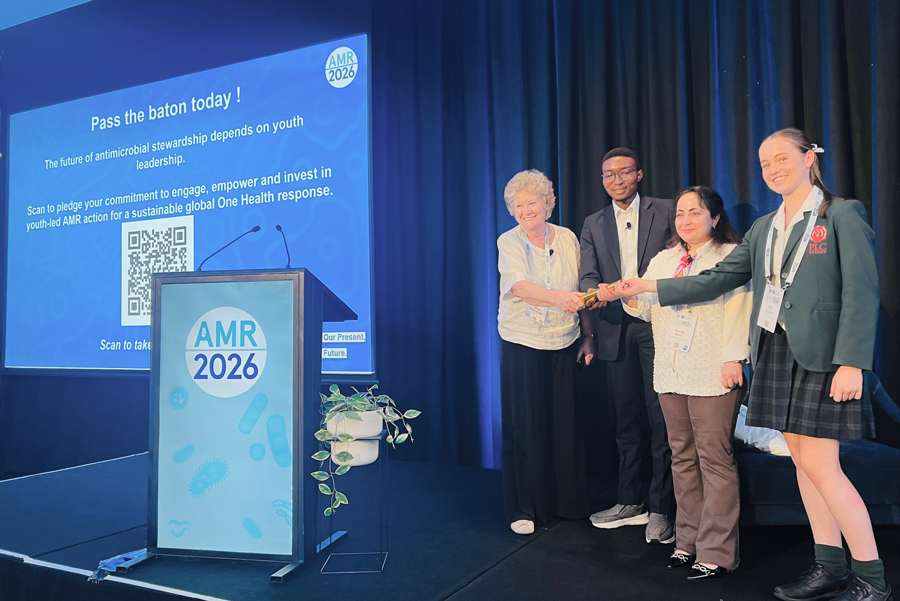
“This is about handing the baton from my generation to theirs, backing them to lead, and letting the rest of the world see what they can do.”
The Hon. Jillian Skinner AM, Former Minister for Health of New South Wales; Former Chair, New South Wales Youth Advisory Council
Actions and considerations for follow‑through to 2029
- Build decentralised advocacy pathways: equip national and subnational decisionmakers with evidence and implementation options that fit local budgets, constraints, and delivery authority.
- Invest in translation capacity, not just data: fund the work of converting technical evidence into short policy briefs, including solutions, and plain-language narratives that communities can validate.
- Treat trust and misinformation as operational risks: plan for science communication, credible messengers, and proactive myth-management as core components of AMR programming,
- Use prevention as a unifying frame across sectors: connect vaccination, IPC and WASH to reduced antibiotic demand and AMR outcomes so prevention investments can be justified across portfolios.
- Build boundary-spanner (transdisciplinary) skills in the AMR workforce: expand programs that expose researchers and practitioners to policy, economics and governance systems so evidence can move faster from insight to decision.
Closing Keynote Session – Lessons, leaders, and leverage: Navigating politics and collective action
Discussion 1: Lessons in AMR
This education segment translated the summit’s AMR urgency into a curriculum reality check: if AMR is to become ‘activity and awareness’ across society, it has to be embedded early and delivered by educators. The discussion linked recent global momentum (including UNGA calls to strengthen AMR education in primary and secondary schooling) to the practical levers that make school change stick: formal curriculum revision, cross‑disciplinary ownership, and teacher implementation support.
Drawing on climate education, Paula Taylor described how climate change has typically remained owned by science teachers and taught late, with attention to causes but not broader implications. Her solution was to treat the current iterative Australian curriculum review as a rare policy moment, backed by a multidisciplinary position paper that spreads ownership across subjects and sequences learning in age‑appropriate ways. She also highlighted that Australia’s ‘Science as a Human Endeavor’ strand can make hot topics teachable immediately by connecting science to lived relevance without crowding the syllabus.
Geoff Masters then mapped how international frameworks shape domestic curricula, pointing to the long shift from memorisation toward transferable capabilities and to assessment reforms like PISA that emphasise applying learning in real contexts. His key point was that reform works best when education is treated as a learning system where the curriculum, teacher development, assessment and reporting all align.
Discussion 2: GAVI’s next chapter: equity, innovation, and global health security
A dive into the pressures reshaping global vaccination, from disrupted financing to rising distrust, and what it will take to safeguard confidence, equity, and the preventive power that keeps infections, and antibiotic use, down.
The discussion opened with reference to HIV management in NZ as a practical playbook for coalition-building and rapid response to managing infectious disease, arguing that the fastest gains came when affected communities were engaged early and structural barriers to prevention were removed. This included legal reform (decriminalising specific behaviours), public needle exchanges, and service access framed as public health tools. Vaccination became the concrete bridge between prevention and AMR.
In Gavi’s decisions about which vaccines to invest in, impact on AMR reduction is one criterion, recognising that preventing infections through immunisation and other basic public‑health measures reduces antibiotic use and the selective pressure that drives resistance.

“Populism is very damaging to public health responses. It gained real traction during COVID, amplified by social media, deep fakes and misinformation, and it’s harmful to getting the coverage that we need for vaccination, even for the most basic childhood diseases … there are still around fourteen and a half million children who have never received even a single dose of the most basic, life‑saving immunisations.”
The Rt. Hon. Helen Clark, Former Prime Minister of New Zealand, Former Administrator of UNDP; Chair, GAVI
The conversation covered the financing cliff now shaping global health. This includes replenishment gaps, donor pullbacks, and the downstream consequence, which is hard choices for countries whose allocations are cut sharply as funding falls short.
The exchange then moved toward practical political craft that included advice to communicate simply, frame issues in terms that decisionmakers recognise, and keep the door open so timing can work in your favour. The segment ended with a reminder that AMR progress will be judged in clinics and communities, not at policy tables.
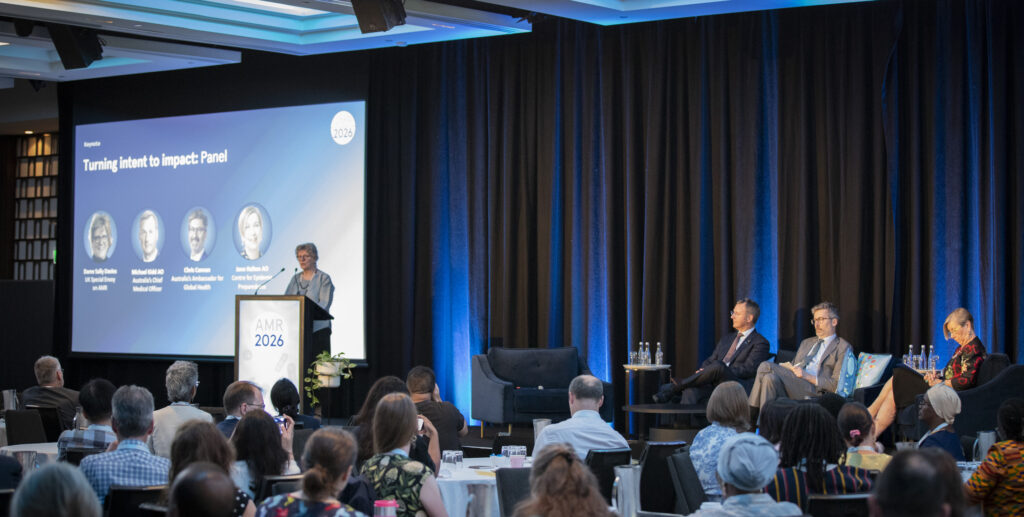
Panel – Power, people and pathogens: Rewriting health advocacy for a distrustful world.
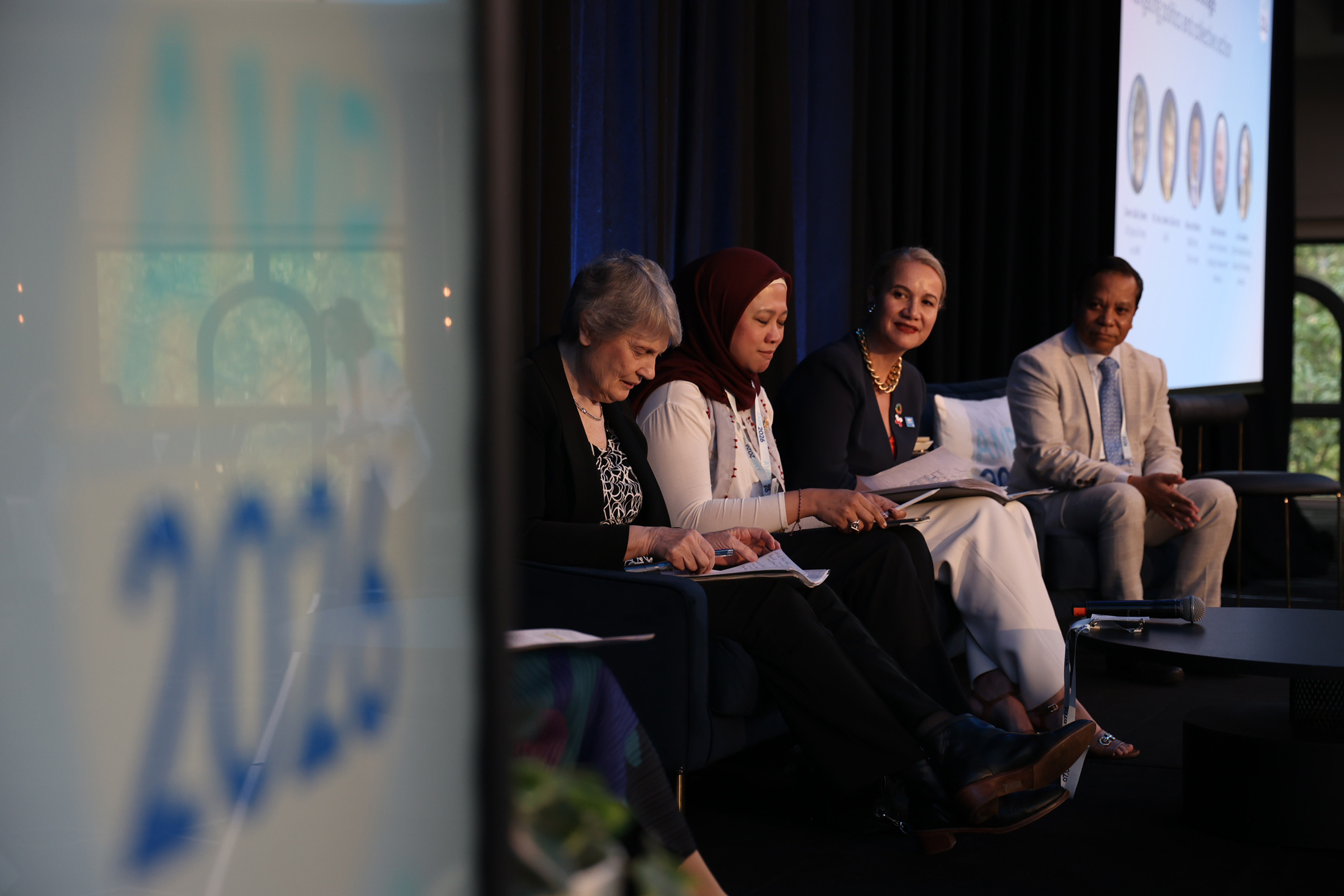
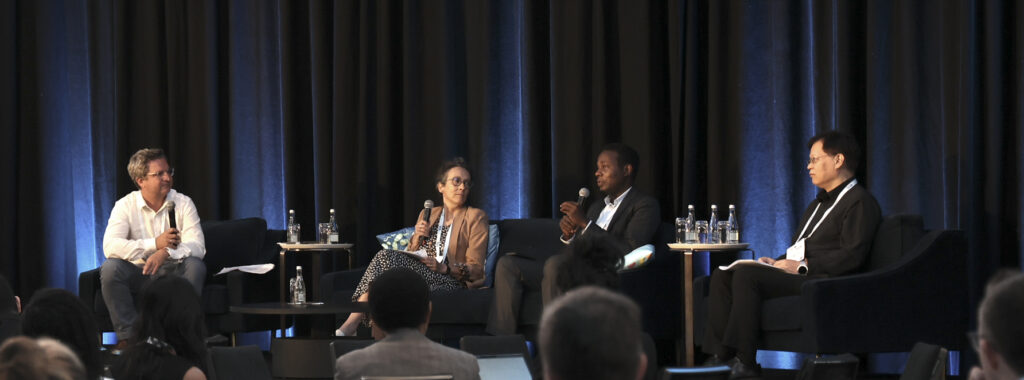
Shifting political winds and competing narratives are redefining how public health messages land. This panel explored how the AMR community can adapt its messages and methods to win attention, build trust, and drive real behaviour change among both leaders and communities. This includes a need for alliances across government, civil society, faith groups, and digital influencers to forge a shared narrative that makes action on AMR urgent, relevant and impossible to ignore.
Summary
This closing panel focussed on how change happens, treating advocacy as infrastructure, translating evidence into political decisions, and political decisions into delivery.
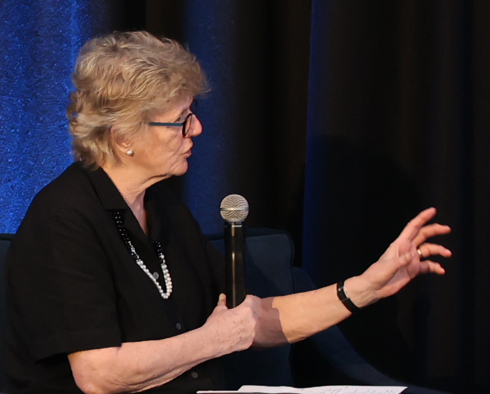
“If I wanted ministers to listen, I needed to frame the issue from a perspective that made sense to them; either about their constituents, or about an issue in the newspaper or about the community. So framing was very important. Timing was very important … If I thought I was going to get a no, I’d say, ‘I haven’t explained it well enough. I’ve failed. I’ll think about this and come back,’ so I could keep the door open.”
Dame Sally Davies, UK Special Envoy on AMR
Advocacy in action
Building on the foundation of the discussions about GAVI and the role of vaccines in infectious disease prevention, panellists confronted today’s more difficult operating environment, marked by misinformation, populism, anti-science sentiment and deepening distrust. The panel argued that evidence-based policy is more than data; it requires synthesis, credible advice, and communication that can survive social media distortion. This was linked directly to prevention: when trust erodes, routine immunisation coverage falls, preventable disease returns, and avoidable infection pressure increases antibiotic demand, which is exactly the upstream dynamic that accelerates resistance.
“Governments need to engage in foresight, looking over the horizon at the complexity of problems coming down the track. Humanity faces existential threats, from climate change to nuclear weapons and how AI is governed … big health challenges like this one (AMR), you need to bring all the best brains to the table.”
– The RT. Hon. Helen Clark
The conversation then widened from leadership at the top to delivery at the edges. A central point was that advocacy must be multilevel because, in decentralised government systems, subnational decision makers are not secondary audiences. They may have limited access to donor agencies and global institutions, but they have direct access to people, and that access is essential.
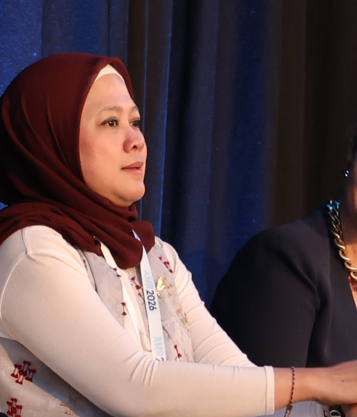
“They might not have access to international organisations and all the global health dynamics, but they have access to the people. And that is the most important access that we cannot work around.”
Diah Saminarsih, Founder, Center for Indonesia’s Strategic Development Initiatives
The panel argued that policy considerations need to be built in from the start of any AMR initiative, not added later once a project is already shaped. In decentralised government systems, advocacy also has to fit delivery constraints: what can be funded, what can be delivered with existing capacity, and what will be workable under tight budgets and operational limits. The emphasis was on using evidence that is recognisable and credible to those affected because it reflects lived experience and practical consequences.
A cross-portfolio lens reinforced that complex issues only scale when coalitions extend beyond a single ministerial silo. Drawing on lessons from other crosscutting domains, the panel argued for finding a clear ‘relevance hook’ that nonspecialists care about and then building alignment across portfolios that do not naturally coordinate. This also surfaced a capability gap. Technical experts are trained deeply within disciplines, but are often less prepared to navigate the economics, governance, and political processes that determine whether evidence translates into action. Practical pathways that connect experts with parliamentary and policy processes were presented as essential for strengthening that translation.
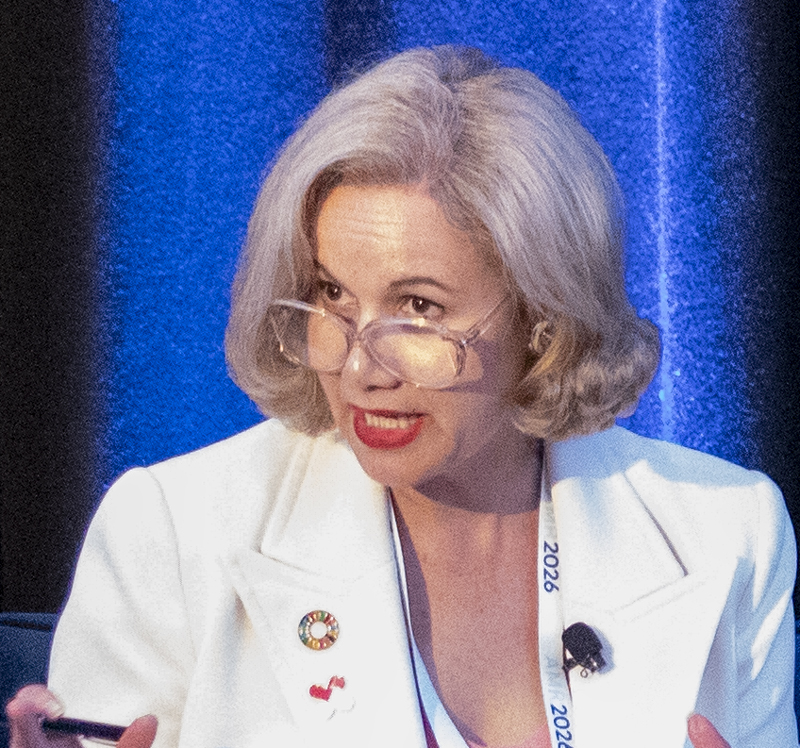
“I conducted 600 interviews myself… and I realised they (the stakeholders who were focussed on climate) didn’t remember that the ocean regulates the climate. Pointing out that connection, finding that relevance, is where our (ocean) advocacy has made a difference.”
Jasmine Chambers, President, Science & Technology Australia
Founder and Chair, Ocean Decade Australia
Finally, the panel returned to political reality, which is that technical evidence needs to be translated into the language of decisions through short policy briefs that set out feasible options, consequences and implementable next steps. It also means framing proposals in terms that relate to constituents and delivery, and tailoring messages for specific settings, including through local languages and trusted institutions.
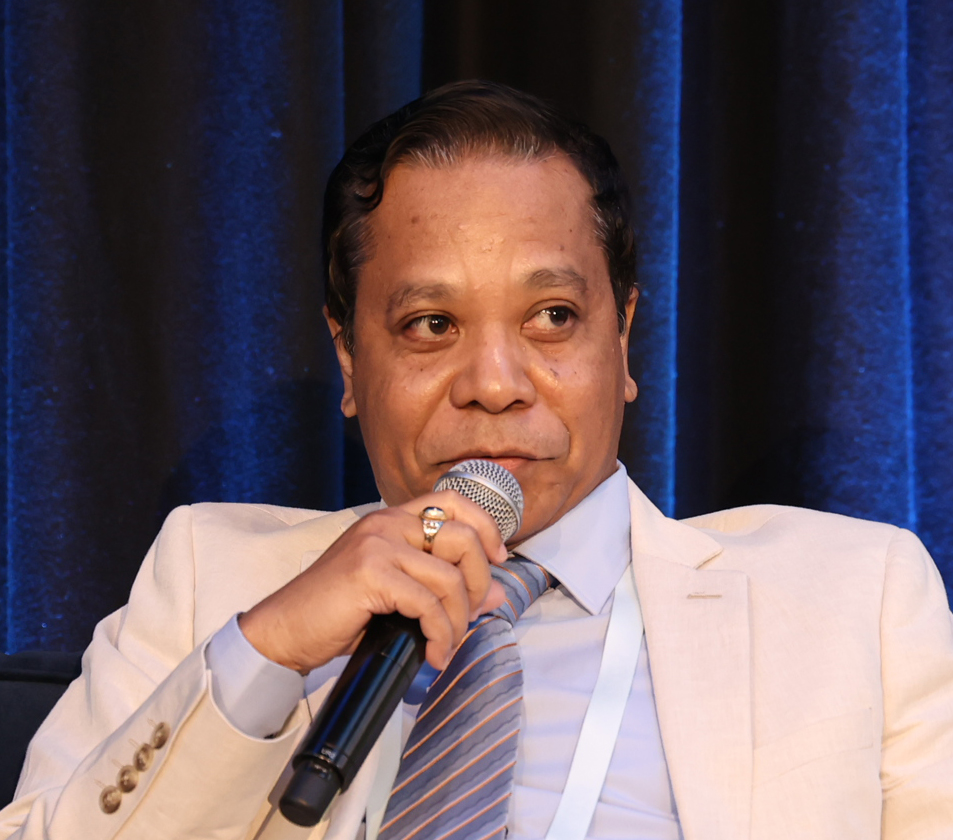
“If you want to talk to the minister, never send them your article or your abstract. Write a policy paper and make sure it’s in the language that they like.”
Nelson Martins, Timor-Leste Lead, CAMO-Net
The shared conclusion was that AMR advocacy needs the same discipline as programme delivery and requires clear framing, trusted messengers, routes to action at multiple levels, and sustained public engagement so that the next surge of political attention produces implementation rather than another cycle of reports.
Actions and considerations for follow‑through to 2029
- Build decentralised advocacy pathways: equip national and subnational decisionmakers with evidence and implementation options that fit local budgets, constraints, and delivery authority.
- Invest in translation capacity, not just data: fund the work of converting technical evidence into short policy briefs, including solutions, and plain-language narratives that communities can validate.
- Treat trust and misinformation as operational risks: plan for science communication, credible messengers, and proactive myth-management as core components of AMR programming,
- Use prevention as a unifying frame across sectors: connect vaccination, IPC and WASH to reduced antibiotic demand and AMR outcomes so prevention investments can be justified across portfolios.
- Build boundary-spanner (transdisciplinary) skills in the AMR workforce: expand programs that expose researchers and practitioners to policy, economics and governance systems so evidence can move faster from insight to decision.
Read the other AMR 2026 reports
Theme 1: Political declaration: from ink to implementation
Theme 2: Data for decision-making
Theme 3: Investing through an AMR lens
Theme 4: Standards, stewardship, and support
Theme 5: Solution ideation, innovation, and impact
Theme 6: Consumers, communications, and campaigns
Theme 7: Evidence, equity, and economics