

Antimicrobial contaminants stemming from healthcare facilities, domestic sewage, agricultural activities, and livestock run-off all have the potential to seep into natural waterways.
While its exact role in the AMR crisis is not fully understood, water is recognised as a critical factor in the emergence and spread of AMR.
Microscopic organisms carrying resistance genes thrive in water, and these genes can be transported through wastewater into the environment, where they are acquired by other microbes. Unlike many pollutants that diminish through water cycles, AMR tends to accumulate.
A study by the Queensland Alliance for Environmental Health Sciences at the University of Queensland checked 47 wastewater treatment plants around Australia and found more than 30 different antibiotics and 13 related compounds in the treated water released into the environment.
The study calculated that these plants release 5.4 kilograms of antibiotic substances into natural waters every day.

Understanding water’s role in AMR
While runoff from farming operations is a potentially vital source of antimicrobials in waterways, perhaps the main sources and drivers of waterborne AMR are hospital and community waste. And these come together in the wastewater system.
A recent study led by researchers from Flinders University revealed alarming findings about bacterial persistence in Australian drinking water plumbing, and identified significant transmission risks in both hospital and residential environments.
“The presence of these antimicrobial resistant bacteria in residential and hospital plumbing systems highlights a pressing public health concern that requires immediate attention,” says Flinders University’s Professor Harriet Whiley.
Published in the Journal of Hospital Infection, the study assessed the prevalence of key AMR threats – being methicillin-resistant Staphylococcus aureus (MRSA), plus carbapenem-resistant Pseudomonas aeruginosa and Acinetobacter baumannii – in hospital and residential drinking water and biofilm samples across Australia.
Key findings showed:
- 73% of residential water and biofilm samples tested positive for at least one AMR pathogen, compared to 38% of hospital samples.
- 45% of residential drinking water plumbing fixtures had at least two of the targeted AMR pathogens, highlighting the risks in home environments.
“Our research underscores the urgent need for enhanced surveillance and targeted interventions to mitigate the risks posed by AMR pathogens in drinking water systems, especially in home healthcare settings,” said lead researcher Dr Claire Hayward.
Wastewater: the great unknown
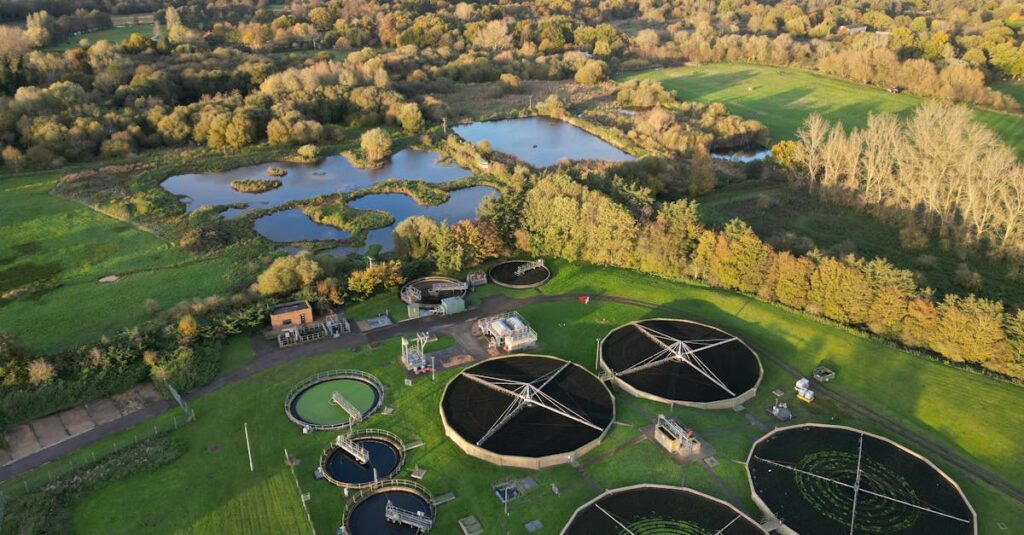
Water systems, particularly wastewater treatment plants, are also emerging as potential hotspots for AMR.
Wastewater treatment plants (WWTPs) are a significant concern within water systems because they serve as collection points for a wide variety of contaminants and microorganisms, including pathogens. This mix creates an ideal environment-often referred to as an ‘evolutionary soup’-that can accelerate the development of AMR.
A major challenge is that most modern treatment processes are designed to remove only a limited range of conventional pollutants, nutrients, and pathogens. They are not designed to effectively eliminate antimicrobials or pharmaceuticals. Plants that rely solely on primary treatment are even less effective, as they mainly filter out solids before discharging the water, thus potentially contributing to the spread of resistance.
Furthermore, a recent study by The University of Queensland Alliance for Environmental Health showed that high levels of antibiotics in wastewater influent can cause treatment plant failure and result in the discharge of untreated wastewater to environments, which carries a much higher risk to the emergence and spread of AMR.
In recent years, many wastewater treatment plants have rebranded as ‘water resource recovery centres’ to reflect their efforts to recover valuable by-products. For example, biosolids produced during treatment are now commonly used in agriculture, forestry, and land rehabilitation.
As water scarcity increases due to climate change and urban growth, there is a growing push for water reuse. However, it is essential that the risks associated with AMR are not overlooked in this process. Many current policies on treated-wastewater reuse are being developed without fully considering the potential dangers posed by AMR (and other contaminants such as PFAS). Additionally, using biosolids as fertiliser and the resulting runoff represent additional potential sources contributing to the spread of AMR, which must be addressed.
“Turning ‘waste’ into ‘resources’ is exciting from a circular economy perspective, but not without first understanding the risks posed by residual chemical and biological contaminants, particularly as they relate to AMR,” says CSIRO ecotoxicologist Monique Binet.
Water birds and AMR
There are a whole range of other unknowns about the role that water might or might not play in supporting the phenomenon of AMR. And that includes the role that wild bird populations that visit these places may have in dispersing AMR.
In a 2022 study, bacteria isolated from 12 species of shorebirds and terns was found to be commonly resistant to at least one antibiotic, suggesting that wild bird populations serve as a potential reservoir and vector for AMR bacteria.
Circumventing disaster
The potentially serious role of water in the AMR crisis prompted the Australian Government Department of Agriculture, Fisheries and Forestry, CSIRO, SAAFE CRC, the Australian Antimicrobial Resistance Network, and Shawview Consulting to convene a high-level roundtable discussion between government and industry on the subject in early 2023.
It focused on ‘the potential for antimicrobial residues entering the environment from a range of sources including pharmaceutical manufacturing effluent, domestic and hospital sewage outflows, the spreading of manure and biosolids on agricultural lands, and the use of antimicrobials in plant industries and aquaculture.
A resultant whitepaper, entitled Measuring, Managing, Mitigating: Gaining a One Health Perspective on Removing Antimicrobial Residues from Water found that: “While there is still considerable scientific uncertainty on the degree of risk posed to human health, there is growing evidence that such discharges can promote the emergence of AMR even at relatively low antimicrobial concentrations.”
The document compiled an action list to address key gaps and provided recommendations that highlighted advocacy, leadership, engagement, monitoring and research initiatives. Among the recommendation areas, a series of discrete actions that should be undertaken are identified, including:
- The establishment of national standards defining maximum permissible levels of antimicrobials.
- The development of monitoring systems to track antimicrobials in water systems.
- The predominant research gap identified was the lack of Australian-context data needed to model or predict AMR risks.

Monitoring and mitigation strategies
Efforts are underway to develop standardised methods for tracking AMR in water environments. These include genetic tools to identify resistance genes and longitudinal surveillance at key sites. Such data will enable risk assessments and guide effective interventions to minimise AMR transmission.
Australia’s Cooperative Research Centre for Solving Antimicrobial Resistance in Agribusiness, Food and Environments (CRC SAAFE), launched in 2023 and based in South Australia, is currently undertaking work to address the research gaps by building Australian-context data and models for AMR in agribusiness, food and environments.
While there have been no large-scale outbreaks tied directly to waterborne AMR so far, the potential risk is significant. Proactive research and management efforts are essential to prevent potential future crises.
You may also be interested in:

Australia’s native wildlife and AMR