Its applications across the One Health paradigm and among diverse audiences – including clinical practitioners, policymakers, and the general public – necessitate a communication strategy that is simultaneously sophisticated and simple.
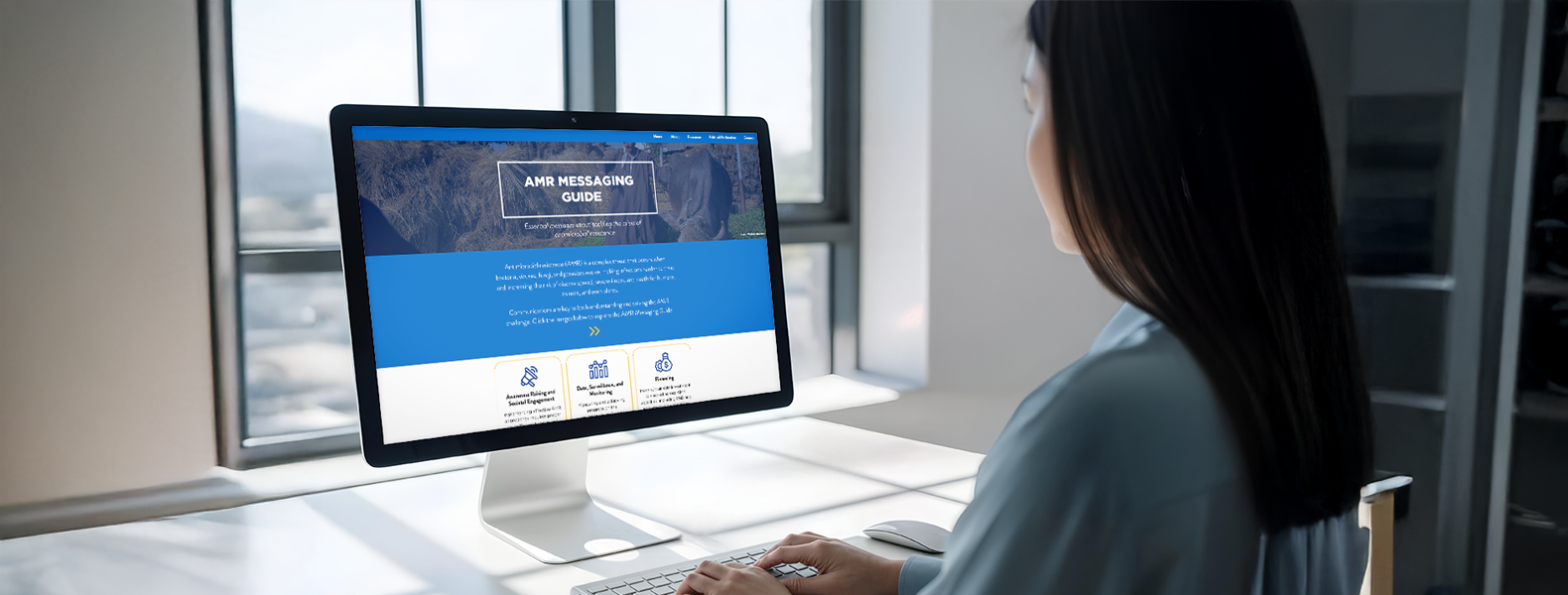
Conveying the urgency of this issue and aligning key messages are required for decisive action, and that’s why the UN Foundation created the AMR Messaging Guide in partnership with dozens of AMR partners and with funding from the Wellcome Trust.
Shaping AMR Policy
Flashback to 2024, United Nations Headquarters, New York City. Political foresight brought the AMR emergency back to the UN for a second-ever high-level meeting on the topic. Progress was stagnant since the first meeting in 2016 and policymakers sought a resurgence of political attention and renewed global cooperation – two unique offerings of UN high-level meetings.
After months of preparatory work and negotiations, the 2024 high-level meeting answered the call by delivering an ambitious political declaration endorsed by world leaders. Its goals: to reduce mortality, expand access to antibiotics, vaccines and diagnostics, catalyze funding, and establish an independent scientific panel to guide future decision-making on this 21st century threat.
The core function of UN political declarations is to galvanize action on a set of achievable yet ambitious tasks. Setting the goalposts is difficult, however, when confronted with a multifaceted crisis and dispersed policy demands. Outside of negotiation rooms, diplomats rely on relevant stakeholders – voices of intergovernmental organizations, civil society, and the private sector – to provide them with empirical insights and practical policy recommendations. This advocacy is a powerful tool to shape a compelling narrative, articulate a common vision, and identify shared objectives. On the road to the 2024 high-level meeting, a nascent group of AMR advocates recognized the opportunity to shape the policy agenda and mobilized in support of a successful political process.
Developing the AMR Messaging Guide
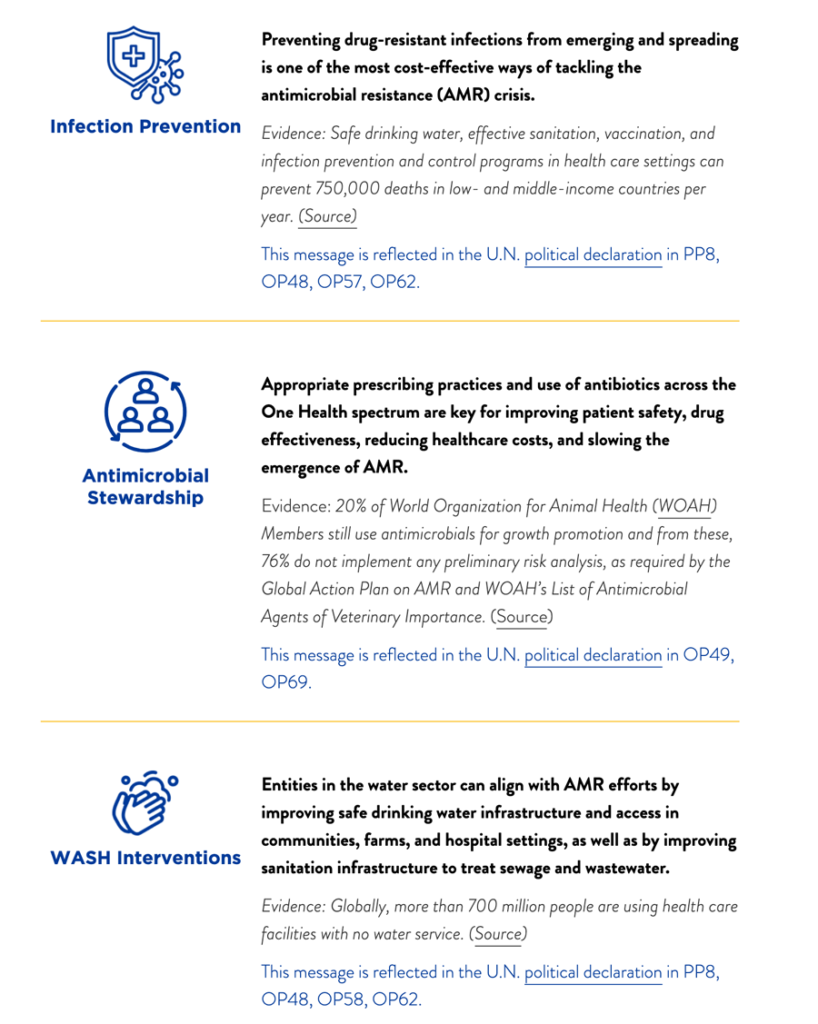
In preparation for the high-level meeting, the United Nations Foundation, with funding from Wellcome, led an ad hoc strategic communications initiative called the AMR Communications Coalition (AMR-CC). With over two dozen experts representing a range of sectors, disciplines, and geographies, the AMR-CC’s primary goal was not to build consensus around a set of policy asks, but to elevate awareness and coherence across messages emerging from diverse parts of the AMR stakeholder ecosystem. Through extensive consultations with this group, UN Foundation collected, analyzed, and distilled thematic groupings of key priorities with corresponding sub-themes, messages, and data points.
This work culminated in the launch of the AMR Messaging Guide in September 2024: a novel tool to help stakeholders augment their own messaging for political cut-through. Since then, it has been updated for improved user experience and evergreen content, including references connected to the 2024 political declaration.
Advancing the AMR narrative
The global health landscape and discourse have changed a lot since the 2024 high-level meeting and creation of this Guide. Strategic communication is essential to sustaining action on AMR across other rapidly evolving health, economic, and development imperatives. The Guide remains an open tool for use by all to validate and harmonize messages to drive measurable progress on shared goals.
The UN Foundation is participating in AMR 2026. A global summit focused on actionable steps to minimise the imapct of AMR. Attendees are invited to take part alongside other AMR communicators in a ‘Creative Blitz’ on the second day of the event, 19 February.
Delegates can elect to join this session through the event app.
This article was written by the United Nations Foundation as part of the AMR 2026 Summit.
You may also be interested in:

Citizen scientists join the fight against antimicrobial resistance