It’s one of the most famous moments of scientific serendipity: Scottish microbiologist Alexander Fleming leaves some petri dishes containing colonies of the bacteria Staphylococcus aureus out on his workbench over the summer holiday, and returns from holiday to discover that a mould flourishing on the dishes has inhibited growth of the deadly bacteria.
That accidental discovery led to the development of the first antibiotic – penicillin, named for the mould that produced it, Penicillium notatum. It has also since inspired a citizen science project that is aiming to replicate that serendipity on a grand scale to tackle the growing crisis of antimicrobial resistance.
At the MRC Centre for Global Infectious Disease Analysis at Imperial College London, a group of researchers discovered that the adhesive covers used on PCR plates were both sticky and sterile. A project using those sticky covers to collect samples of Penicillium from the air had proven successful, and PhD student Jennifer Shelton wanted to try that same approach to sample for the mould Aspergillus fumigatus.
This particular mould is notorious, says Professor Matthew Fisher, who led the Aspergillus project. “Fungal infections are getting worse; they’re getting more resistant but Aspergillus fumigatus is the biggie,” says Fisher, a microbiologist at Imperial College London. “It’s such a terrifying infection and it kills more people annually than malaria does.”
In a UK-wide citizen science project titled Science Solstice, Shelton and her colleagues recruited 787 volunteers from around the country to collect more than 2100 samples of Aspergillus fumigatus, using nothing more than the sticky covers placed on an open windowsill for several hours on the day of the summer solstice. When the samples were returned, the team cultured them to look for evidence of resistance to the class of antibiotics most commonly used to treat Aspergillus fumigatus infection – the azoles – which also includes a widely used agricultural fungicide.
The results of that initiative show the potential and value of citizen science in the fight against antimicrobial resistance. “It was an extraordinary data collection exercise,” Professor Fisher says. “It came up with a very good robust answer, which is that one in 20 spores in the air are now resistant to these azoles through fungicide selection.” Resistant spores were fairly evenly distributed across the country and throughout the year, which means those most at risk from Aspergillus infection – particularly people who are immunosuppressed or with lung conditions such as cystic fibrosis – are constantly being exposed.
Unblocking the antibiotic pipeline
“
Soil is a gold mine. Most of the antibiotics we rely on today originally came from microbes living in nature, especially in the soil.
Dr Zeinab Khalil
Microbiologist Dr Zeinab Khalil was only a young girl when she encountered the human toll of antimicrobial resistance. Visiting her surgeon father at his hospital workplace, she witnessed an elderly man admitted to the emergency department and later found out he had died from a multidrug-resistant lung infection. That moment decided the entire course of her life. “I was very passionate about studying microbial interactions and how we can find antibiotics that can stop the spread of multidrug-resistant pathogens,” says Dr Khalil, an Australian Research Council Future Fellow at the University of Queensland.
It’s a quest of some urgency, as the rise and spread of antimicrobial resistance demands the discovery of new antibiotics, but at the same time investment in research and development of new antibiotics lags behind many other research fields.
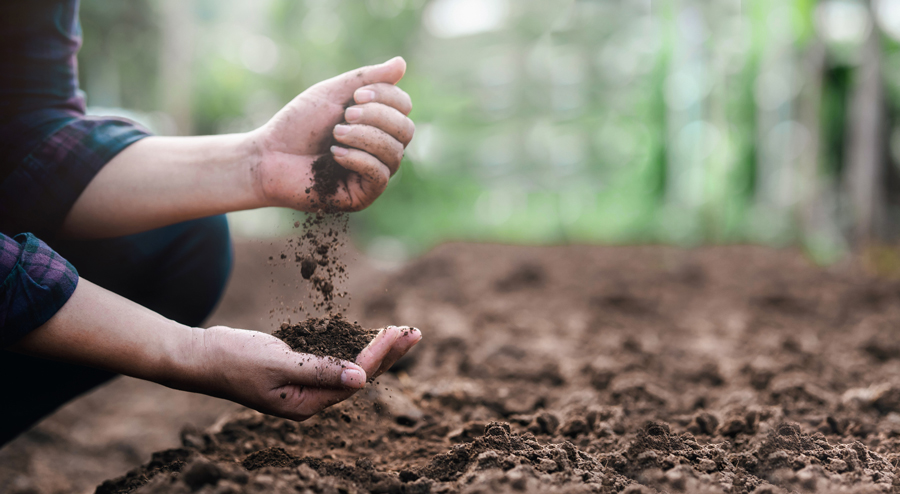
That passion and understanding led to the Soils for Science initiative; a citizen science project that encourages volunteers to send in soil samples from their local area to test for bacteria that could be a source of new antibiotics. “Soil is a gold mine,” Dr Khalil says. “Most of the antibiotics we rely on today originally came from microbes living in nature, especially in the soil.”
Since its launch in March 2021, Soils for Science has enrolled more than 6000 citizen scientists from around Australia, and they have sent in more than 15,000 soil samples. That scale of data collection would be impossible for the research team themselves to achieve.
Dr Khalil herself has analysed 500 of those samples, and from those isolated around 7000 microbes and identified more than 100 potential new antimicrobial compounds. The project has inspired a similar initiative in Belgium, and also led Dr Khalil to launch another similar project called BLOOM (Biosustainable Life Out Of Microbes) at the UQ Biosustainability Hub, Australian Institute for Bioengineering and Nanotechnology, which will collect samples not just from soil but also from the marine environment in Queensland.
Raising awareness of AMR
“
We teach our students at the University by involving them in providing a service to society.
Professor Víctor Jiménez Cid
The benefits of using citizen scientists to understand the nature and scale of antibiotic resistance are two-fold. Not only does this approach enable a scale of data collection that would otherwise be logistically challenging and extremely expensive, but there is also a vital opportunity for education.
This second element was one of the driving forces behind the MicroMundo project in Spain, says microbiologist Professor Víctor Jiménez Cid, from the Complutense University of Madrid. The Spanish Society of Microbiology had launched a teaching and education division, and were inspired by the work of US microbiologist Professor Jo Handelsman and the Tiny Earth project; a citizen science initiative recruiting first-year university students to collect soil samples and screen for new antibiotics. So they decided to launch their own version in Spain, but training university students to get highschool students involved in soil sampling and testing. “We teach our students at the University by involving them in providing a service to society, and the service would be to bring scientific culture on this global health problem which is antibiotic resistance,” Professor Cid says.
In the nine years since the volunteer-run project launched, it has expanded to 32 hubs in 31 Spanish and Portuguese universities, run in around 114 schools on average every year, involved thousands of highschool students and isolated more than 6200 potential antibiotic-producing strains of soil bacteria. One in 25 of these showed some activity against a screen of pathogenic bacteria.
Professor Cid is particularly proud of the impact the program has had on its volunteer citizen scientist. “We see at the university students that tell us, ‘actually, I decided to go for biology or for pharmacy because you came to my secondary school, and it was my first contact with this, and I said, I can do this, I want to’,” he says.
The project is also building an extensive database of samples that includes the coordinates of where the bacteria was isolated from, and the name of the student that collected it. That resource is available to any researcher who wants to access it, and Professor Cid says the MicroMundo project’s only request is that the student gets acknowledged in the event that a discovery is made.
Finding phages
“
We can also then do studies to see whether phages in certain geographical areas match the bacterial strains in those areas too.
Esme Brinsden
Discovery and developing new antibiotics will be vital in combating antimicrobial resistance. But antibiotics aren’t the only weapon being deployed in this war. Phages are viruses that consume bacteria. They are incredibly numerous – phages outnumber every other life form on Earth – and incredibly diverse in reflection of the diversity of their bacterial prey.
Phage therapy is an emerging treatment for antibiotic-resistant bacterial infections, but its effectiveness can be substantially boosted by using a range of phages in a therapy cocktail. And that’s where citizen scientists are proving invaluable.
The Phage Collection Project began at the Microbial Interactions Lab at the University of Southampton, where microbiologist Associate Professor Franklin Nobrega and his research team were looking for ways to advance both the science and awareness of phage therapy as a solution to antimicrobial resistance.
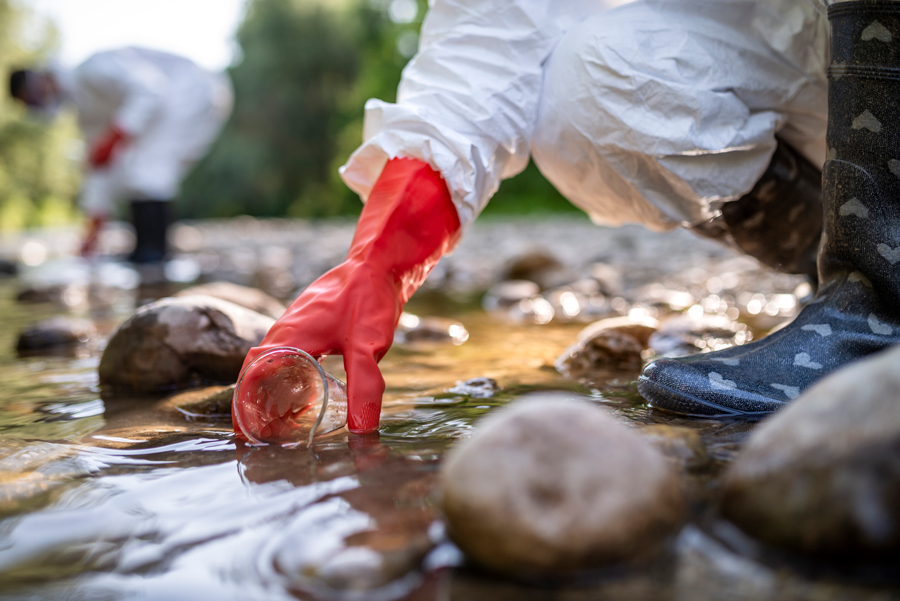
Their idea was to enrol citizen scientists of all ages – but particularly targeting school students – to collect water or soil samples from their local environment, and send them in to analysis to find phages. “We can also then do studies to see whether phages in certain geographical areas match the bacterial strains in those areas too,” says researcher and project co-founder Esme Brinsden.
Like MicroMundo, the Phage Collection Project places great importance on educating the general public about antimicrobial resistance and phages. “You can educate through leaflets and different talks, but actually when you engage people in the science, it facilitates long term engagement with the science and the topic,” she says. They’re also hoping to see some ‘reverse socialisation’, in which student participants are then informed and empowered to help educate their peers, friends and family. “We’re not only just educating a certain group of the population, but actually that knowledge dissemination can spread between generations and increase overall awareness,” she says.
While the project is still in relatively early stages, Brinsden says they’re already finding that members of the public who engage with the project are also keen to find out more about phage therapy and antimicrobial resistance. And there’s also great interest from researchers and clinicians working in antimicrobial resistance about the resource this initiative is developing. “We already have had interest from clinicians who have got patients struggling with chronic bacterial infections or antibiotic resistant infections,” she says. “We’re ultimately hoping to use our phages in phage cocktails and phage therapeutics, so not only doing research in the lab but being able to translate that into a clinical setting.”
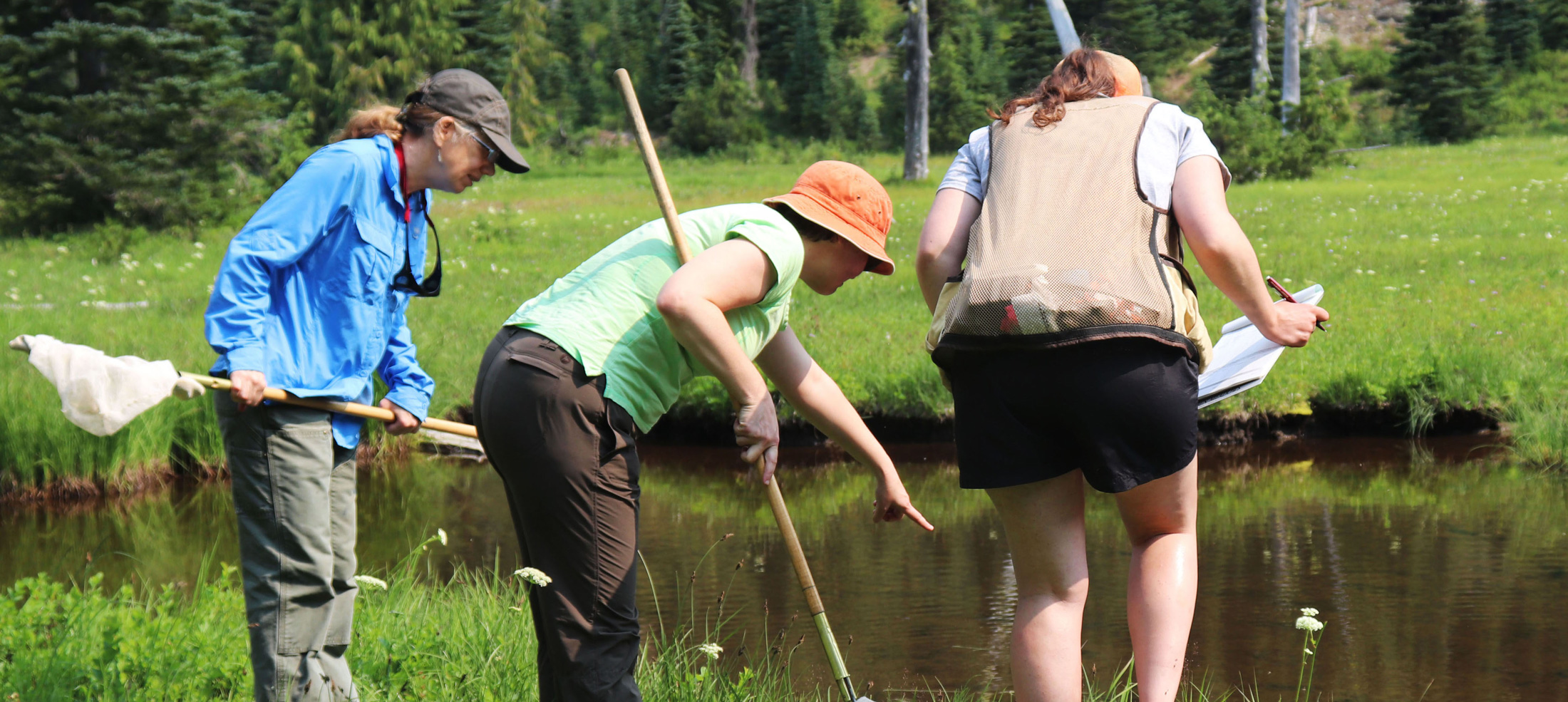
Header image: Citizen Science Coordinator and volunteers spot a frog in the pond. NPS Photo by Ivie Metzen. Source: Wikicommons
Bianca Nogrady is an award-winning science journalist whose reporting on science, health and the environment.
You may also be interested in:
The threat of multi-drug resistant tuberculosis